
Did you know that England was once ruled from Caversham ? Here’s the tale of William Marshal, often hailed as ‘the greatest knight,’ a towering figure in medieval England and ‘hand to the King’.
Born in 1147 as a fourth son to a minor lord, he rose from relative obscurity to become one of the most powerful men of his era, serving five English kings and playing a crucial role in the formation of the Magna Carta.
While much of his life was spent on battlefields and in royal courts, Marshal had significant ties to Reading and Caversham, which formed part of his vast estates and played a role in his enduring legacy.
Sir William Marshal, also known as William the Marshal, was one of the most renowned knights and statesmen of medieval England, serving five kings over his lifetime. His connection to Caversham, a manor in Berkshire, England, was significant and lasted for several generations of his family.
William Marshal (c. 1146-1219) rose from humble beginnings as a landless knight to become the Earl of Pembroke and one of the wealthiest men in England. His exceptional skills in combat, unwavering loyalty to the crown, and diplomatic acumen made him an indispensable figure in English politics during the late 12th and early 13th centuries.
Marshal's career began as a tutor and guardian to Henry the Young King, son of Henry II. He gained fame in tournaments and proved his worth on the battlefield, eventually becoming a trusted advisor to Henry II[9]. After Henry II's death, Marshal continued to serve subsequent monarchs, including Richard I, King John, and Henry III.
The Caversham Connection
William Marshal's connection to Caversham began when he married Isabel de Clare, daughter of Richard de Clare, in 1189. Through this marriage, Marshal acquired numerous estates, including the lordship of Caversham which he used as a convenient central location between London and his many other estates all over England, Wales and Ireland.
Upon the death of King John in 1216, William Marshal was appointed protector and regent for John's nine-year-old son, Henry III. As regent, Marshal was responsible for governing the kingdom on behalf of the young king, which he often did from Caversham Manor. Despite his advanced age of around 70, he took on this role with remarkable energy, prosecuting the war against Prince Louis and the rebel barons. Marshal served as regent from Henry III's ascension to the throne in 1216 until Marshal's own death in 1219. During this time, he reissued Magna Carta and worked to secure peace and stability for the young king.
During the early 13th century, one of William Marshal's sons, likely his eldest, had Caversham Park laid out and fenced as a hunting ground for deer and other game. The park covered an area of approximately 1,000 acres, encompassing what is now the former BBC site set to be converted into a residential home and the surrounding area of Caversham Park Village. This expansive hunting park remained largely unchanged in size and shape for over 700 years.
While Caversham Park served primarily as a hunting ground, the manor of Caversham itself held significant importance. The Caversham manor house, though not located within the park, was a center of local governance. Additionally, Caversham became known for its chapel dedicated to Our Lady, which grew into a notable pilgrimage site.
It is also thought that Marshal, along with the Abbot of Reading Abbey, were responsible for building the first crossing of the Thames at Reading, although detailed proof of this is scant.
The Marshal family's influence in Caversham continued through William's five sons, who successively became Earls of Pembroke and Lords of the Manor of Caversham. However, as none of Marshal's sons had children of their own, the estate eventually passed back to the de Clare family and then to the Despencer family.
The Despencers, who held Caversham through tumultuous periods of English history, made significant contributions to the local area. They granted substantial amounts of gold to the Chapel of Our Lady at Caversham, enhancing its status as a pilgrimage destination.
William Marshal's Final Days
Interestingly, Caversham played a role in the final chapter of William Marshal's life. In early May 1219, while at Caversham, the aging Marshal declared his intention to join the Knights Templar. The Master of the Templars travelled to Caversham to perform the necessary rituals, allowing Marshal to fulfil his long-held desire to become a Templar before his death.
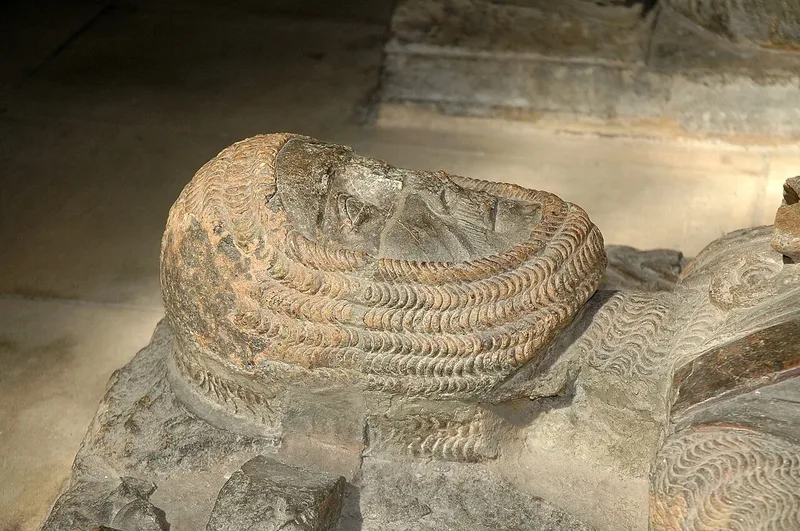
William Marshal passed away on May 14, 1219, at the age of 73. He was buried at the Temple Church in London, where effigies of him and two of his sons can still be seen today. At his funeral, Cardinal Stephen Langton described him as "the best knight that ever lived," a testament to his enduring legacy.
His story is told on a plaque on Caversham Bridge errected by CADRA.

Comments
No comments yet. Be the first to share your thoughts.
Join the conversation
Log in to leave a comment on inReading.