
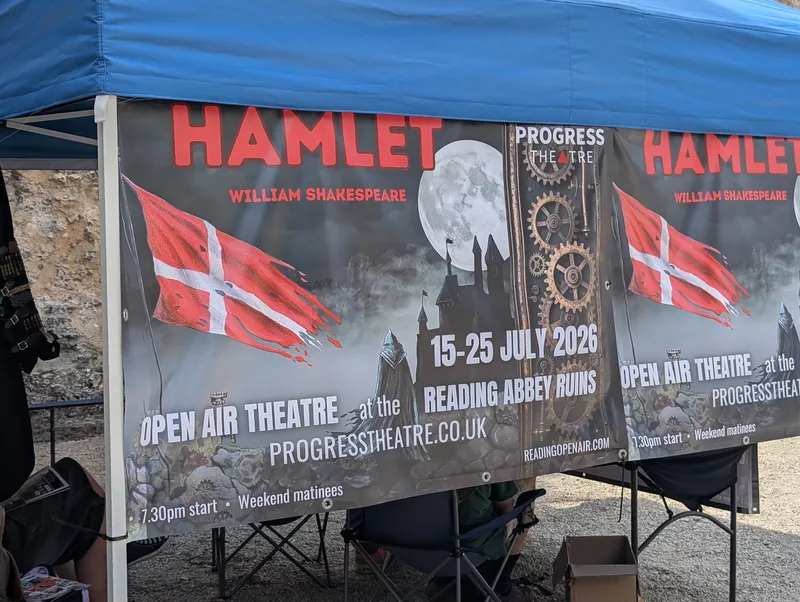
Director John Goodman explains how a pared-down cast is giving Shakespeare's famous play a timeless feel when it comes to the Reading Abbey Ruins
If walls could talk, what story would they tell? Well, Reading Abbey’s ancient stones will soon be speaking loudly: they form the backdrop for a unique theatrical experience as Prospect Theatre prepares to stage one of the Bard’s most renowned works, Hamlet.
After a gap year, the amateur theatre based in Christchurch Green is once again turning the historic site into an outdoor auditorium for the annual Open Air Shakespeare. Come rain or shine, the play will be going on.
The Tragedy of Hamlet is the longest play to come from the quill of William Shakespeare and tells the story of a Prince who wants revenge against his Uncle Claudius, who murdered Hamlet’s father to seize the throne of Denmark … and marry Hamlet’s mother.
The five-act drama is set in Denmark and includes everything from ghostly goings-on to fights and insights into the human condition. With a run-time of four hours and a large cast, it is no wonder that previous Progress Theatre teams have shied away from adapting the play. After all, no one wants to be leaving the Abbey after midnight with numb bums and in a torchlit procession.
Instead, director John Goodman has made some sensitive nips and tucks, ensuring the action flows even though some subplots have been lost. The result is a play that runs for just under two-and-a-half hours. It should please Shakespeare purists and those looking to better understand the Bard’s work.
“Last time we did Hamlet in the theatre itself, I helped adapt it,” John says. “One of my regrets was that we hadn’t cut enough.” No such problems this time.
Among the changes, John has brought together an ensemble cast of 13, with some minor roles doubled up, creating a tight and energetic dynamic.
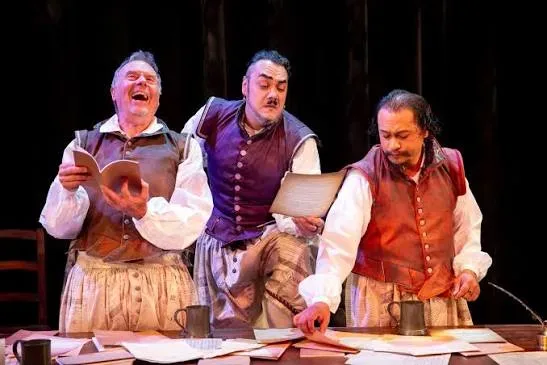
“The players are also the soldiers and messengers and so on, while Rosencrantz and Guildenstern are female parts,” director John Goodman explains. “There is a nice dynamic between the three actors who are playing the Players who are getting involved in sort of sending up the proceedings a bit.”
To help the audience navigate the narrative's swift pacing, a familiar theatrical device has been repurposed.
John says: “We've made the grave digger into a narrator figure, so Chris Moran, a past director of Open Air Shakespeare, will introduce the play and appear at intervals to help the audience get to grips with the plot.”
And another change casts Hamlet as a younger man: the opposite of a recent production starring Sir Ian McKellen as the Danish prince.
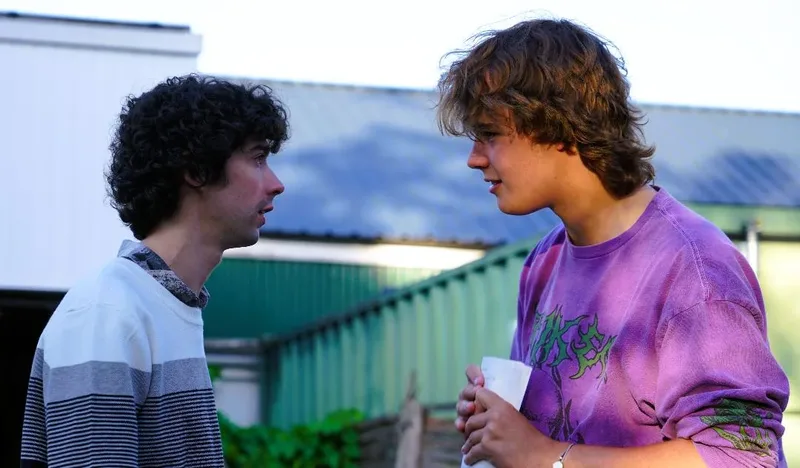
Dylan Collie, 22, plays the title role of a university student struggling to cope with his emotions, with Amy Taulbut playing Ophelia.
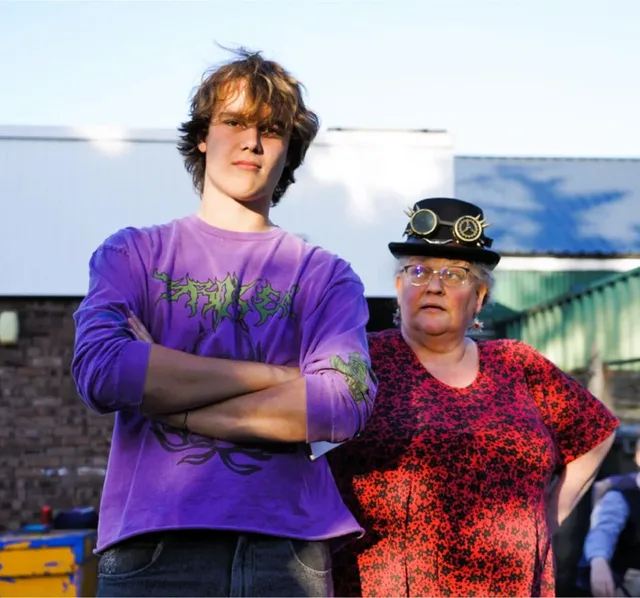
John says: “Most productions cast an actor around the age of 40 to play Hamlet, but he is supposed to be a university student. I asked Dylan to play it slightly younger than that. He’s the right age to be a student and, in doing that, it unlocks a whole point of view: He is conflicted because he’s not a mature adult; he’s a young person who doesn’t know how to deal with his feelings.
“When you make Hamlet younger, then you can make Ophelia younger, and you can make his parents a bit younger as well.”
This will affect how the action unfolds in court.
Lighter touches along the dark path
Hamlet follows a famously dark path, but John says the Progress Theatre production deliberately highlights the lighter, sharper moments embedded in the script. In doing so, it helps make the final act resonate even more.
“We've tried to bring up as many of the comic elements that are there as possible,” John notes. “I don't think it should be a surprise to people to hear that it ends sadly, but there will be things to laugh at along the way.
“I think the tragedy hits harder when you have established a liking for the characters.”
Other changes will also wow. Years ago, John turned The Taming of the Shrew into a Western, but here they have gone in a different direction: steampunk. In doing so, the visual identity moves away from traditional period attire, opting instead for a distinct aesthetic designed by production manager Mandy Dodd and the wardrobe team. The set features cogs, wheels, and a large physical clock onstage. When coupled with the backdrop of the ruins, it represents a kingdom in decline.
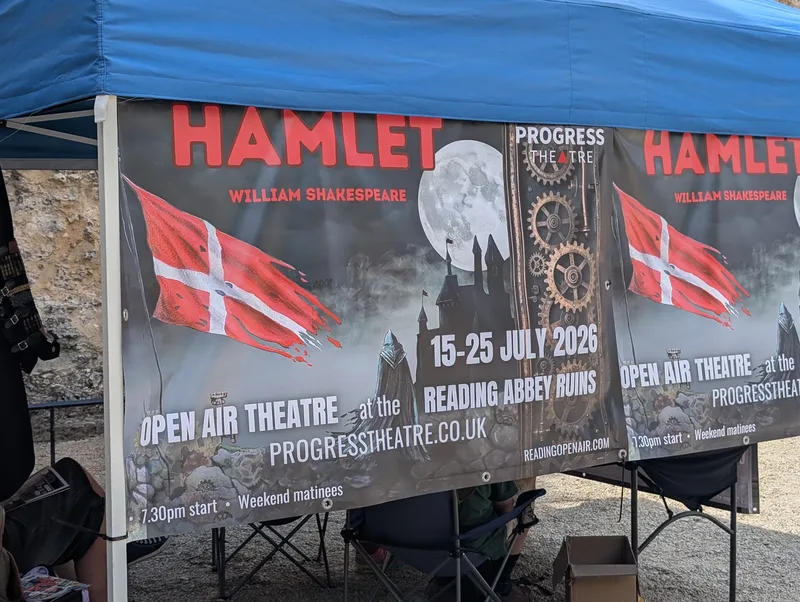
“Because our adaptation has many modern resonances, there was a temptation to set it in modern dress. That seems jarring when you get the historic setting, so I sat down with the costume people and said I would like a setting that places it outside of real time.”
The results will look striking when audiences see them.
John adds: “I think there will probably be some purists who won't like it, but when you look, I'm a frequent attender at the Royal Shakespeare Company, and when you look at the settings and the twist that they put on Shakespeare, you realise that you know in here in the 21st century we don't do things, the old John Gielgud men in tights, and Elizabethan ruffs.”
At the same time, he knows that, because the Open Air experience is a firm Reading tradition, audiences will expect the unexpected.
“We recognise that the typical audiences that we get for our Abbey Ruins productions are sort of split,” he explains. “You get some out-and-out Shakespeare fans who jump at any opportunity to see some Shakespeare, and then you get people who are coming because of the event: it's outdoors, it's in an interesting location, and they can bring a picnic. So we get people who come every year, regardless of what we put on.”
While the cast might be relatively small, a lot of work goes into raising the curtain for the 10-day production. John says there will be more than 100 volunteer sessions in order to handle all the logistics. The backstage team has also been heavily supported by volunteers from the former Woodley Theatre, who brought their expertise to the project after their own group wound up.
“It’s a big project. We are building a theatre where there is no theatre. We bring in seating and all the infrastructure you need: toilets, a bar, changing rooms, and a box office,” John says. “We have something like more than 100 volunteer sessions during the run just for the front of house.”
Add in ensuring adequate and secure storage for the wardrobe and props and getting all the right pieces in place at the right time, and you can see why John says the project is a large one.
“I hope we’ve got quite good at it though,” he adds.
For now, the team are looking forward to welcoming audiences for their fresh take on Hamlet.
“If you don’t know Shakespeare and are a bit nervous about it, we think this is a great introduction. You will hear all the big speeches, but we’ve tried to make it as easy and as entertaining as possible to follow. If you do know Shakespeare and are familiar with Hamlet, we’ve got a different slant on it, and you’ll get a chance to see something new.”
A steampunk Hamlet: it should go like clockwork.
When is Hamlet coming to Reading, and how can I get tickets?
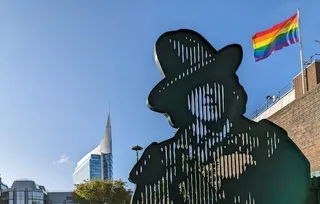
Hamlet runs from Wednesday, 15 July, through to Saturday, 25 July in the Reading Abbey Ruins. Entrance is from Chestnut Walk, also known as the Oscar Wilde Memorial Walk, and accessed from Forbury Road.
Evening performances start at 7.30pm, with gates open from 6.45pm. The Saturday matinees start at 2.30pm and the venue is open from 1.45pm.
The production has an expected total running time of 2 hours 35 minutes, which includes a 20-minute interval. In the case of rain, a shortened version may be presented and refunds are not available. Audiences are welcome to bring a picnic to the venue to enjoy before the performance, but alcohol is not allowed as there is a bar on site.
Audiences are advised to bring warm clothing as the temperature drops, and waterproofs if there is a chance of rain. No umbrellas are allowed, apart from in the back row.
Tickets are priced between £23.72 and £37.73 for adults, and between £20.48 and £34.50 for concessions, including all booking fees.
Tickets can be booked from Ticketsource: https://www.ticketsource.com/readingopenair/hamlet/e-grrvaz
For more on the show, log on to: https://whatsonreading.com/venues/progress-theatre/whats-on/hamlet-reading-abbey-ruins


Comments
No comments yet. Be the first to share your thoughts.
Join the conversation
Log in to leave a comment on inReading.