
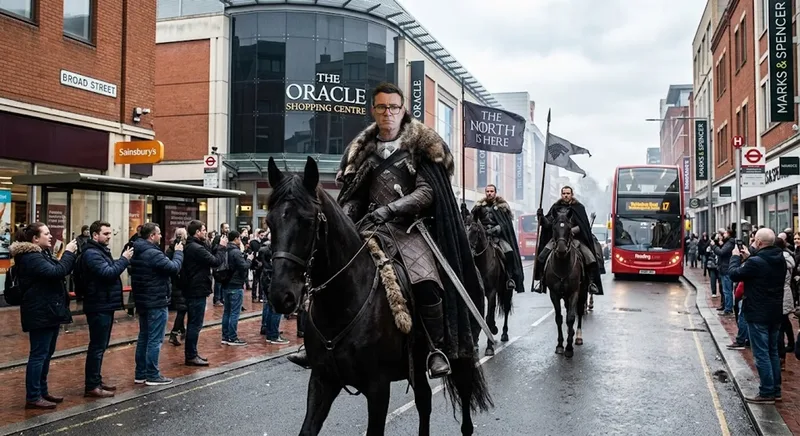
In the grand, chaotic, and often farcical narrative of British politics over the last decade, we have witnessed a spectacle that would make George R.R. Martin weep with envy. We have cycled through seven Prime Ministers in a timeframe that feels more like a binge-watch of a high-stakes fantasy drama than a stable democratic timeline. Yes, we're living in the Game Of Thrones era.
The revolving door of 10 Downing Street has seen characters come and go with the speed of a fleeting Westerosi summer. Yet, as the dust settles and the current political landscape shifts, a new figure is emerging from the misty, post-industrial north, heralded by many as the inevitable successor to the crown: Andy Burnham. Known to his legion of supporters and political onlookers as the King in the North, the Mayor of Greater Manchester seems poised to trade his metropolitan domain for the ultimate seat of power. For those of us living in the leafy, tech-centric, and traffic-clogged corridors of Reading, the potential ascent of Burnham is not merely a headline in a national broadsheet; it is a signal of a fundamental shift in the winds of governance that could reconfigure the very nature of our local life here in Reading.
Our town has long held a unique position as a commuter heartbeat, a town caught between its historic market origins and its more modern status as the Silicon Valley of the United Kingdom. We are a microcosm of the national struggle - caught between the demands of infrastructure, the desperation for affordable housing, and an ongoing state of development-induced anxiety. If the man who revitalised Greater Manchester transport and championed the northern powerhouse rhetoric finds himself occupying the seat currently occupied by an ever-changing cast of predecessors, as seems increasingly likely, what becomes of our town? Will we find ourselves under the mandate of a new Thames Valley Mayor, or will we see our long-awaited infrastructure projects fall victim to a redirected national treasury focus? Let's peer into the crystal ball of the Burnham administration and consider the implications for our own local fiefdom based on his track record and recent statements.
A Devolved Thames Valley
Andy Burnham has spent the better part of his Manchester mayoral tenure as the loudest, most persistent advocate for devolution. He has consistently argued that the concentration of power in Westminster is a relic of a dying empire, ill-equipped to solve the regional disparities that plague the UK. He has long proposed that economic prosperity should be driven by empowered regional bodies rather than decisions made by pencil-pushers in Whitehall. For Reading, this is a pivotal point. Should Burnham assume the mantle of Prime Minister, we could be looking at the rapid acceleration of the 'Thames Valley Mayor' concept. Currently, Reading operates within the context of a borough council that often finds itself struggling to assert dominance against regional interests (think third river crossing) and central government budgetary constraints (think social care). A Thames Valley combined authority, under the ethos Burnham has championed, would likely represent a significant shift in how Reading manages its strategic future.
Imagine a structure where Reading, along with its neighbours, given more direct control over regional planning, transport, and economic development. Burnham’s model in Manchester suggests a focus on integrated public transport that acts as the circulatory system of the region. For Reading, this could mean moving away from the fragmented chaos of bus services and local road-widening schemes toward a more holistic, possibly re-regulated transit network. If Burnham imports the 'Bee Network' philosophy to the Thames Valley, we might see the prioritisation of local connectivity that isn't just focused on getting people to Paddington, but on moving people across the town and the wider valley. However, the caveat remains: devolution requires funding, and the Treasury, under any leader, is a notoriously difficult beast to tame. Would a Burnham-led government allow us to keep more of our locally generated tax revenue, or would the regional Mayoralty become another layer of bureaucracy that we have to fund, adding to the local tax burden of every Reading resident?
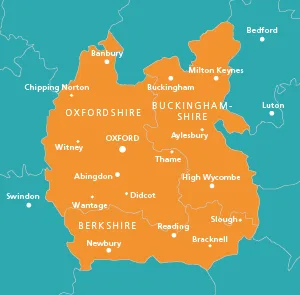
And a fundamental question will be 'what is the Thames Valley?'. The current police area awkwardly covers Oxford, Newbury, Milton Keynes and much of Buckinghamshire - towns such as Aylesbury, High Wycombe and Amersham, but not Swindon. Based on what work has been done to date it is likely that the mayoralty would cover all of Berkshire and Oxfordshire and possibly extend to Swindon and/or Buckinghamshire.
Infrastructure & The Thames Issue
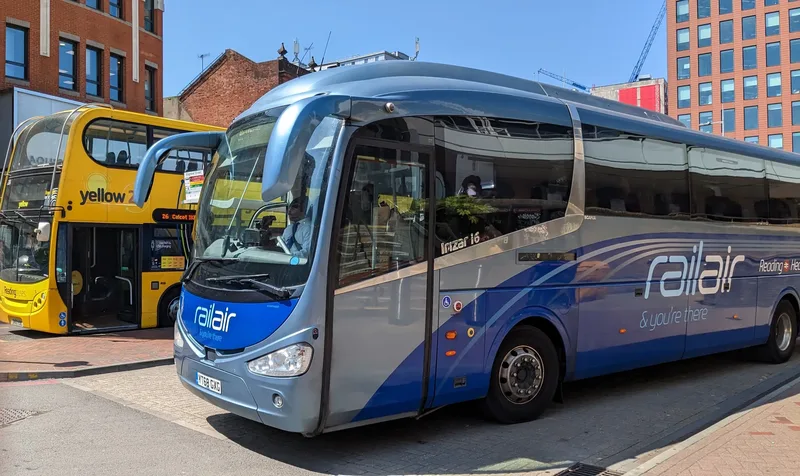
One of the most persistent thorns in the side of any Reading resident is the state of our infrastructure. From the chronic congestion of the IDR to the desperate need for a third Thames bridge and the ludicrous cost of rail tickets, the question of transport is never far away. Burnham’s track record, while heavily focused on public transport, has often been a mix of successful advocacy for massive capital projects and the pragmatic reality of budget constraints. He is a man who loves a big, transformative project, but he also knows the political cost of failing to deliver. However, his rhetoric often focuses on 'levelling up,' which in his view usually means the North, so with his stated new power base in 'No10 North' you have to wonder if the Thames Valley will be cut out of any major investment such as a third river crossing or a direct rail connection to Heathrow?
There is also a real risk that Burnham’s brand of infrastructure investment is hyper-regional. He seems determined to remain focused on his Northern roots, rather than the South East, and specifically high-growth areas like the Thames Valley, which may be considered to be more self-sufficient. This could actually lead to a 'reduced infrastructure investment' scenario for our region, where Whitehall grants become scarce, forcing the proposed Thames Valley Mayor to hike local levies (whatever they may be) to pay for essential upgrades. Rates, parking, bins, permits, the few low value means for RBC to currently raise revenues may need to go sharply up, but with less money coming from the centre. However, the ability to raise additional local taxes may be on the cards via rates, tolls and even a Scottish style local income tax. One thing is certain, the tax burden will go up if you are a net contributor.
A Social Housing Revolution
If there is one area where Andy Burnham has been consistently vocal, it is in the demand for more social housing and the regulation of the private rental sector. He has openly fought against the 'Right to Buy' policies that depleted social housing stock across the country and has pushed for local powers to intervene in the housing market. In a town like Reading, where the cost of living and the cost of renting have skyrocketed to levels that are pricing out the very people who power our town's services, a Burnham-led housing strategy would be a significant point of interest. Already RBC have benefited from changes in Westminster policy that allow them to build more social and affordable housing. Burnham advocates for a housing-first approach, and his potential national policy might include sweeping powers for local authorities to acquire land and develop housing stock that is genuinely affordable, rather than the luxury flats that currently dominate our skyline. Since land availability is a massive issue in Reading, this may be welcome.

Instead of approving endless high-rise developments that serve as investment vehicles for offshore entities or corporate landlords, we might see a push towards social housing developments that integrate with the town's existing fabric. Burnham, being a pragmatist, knows that you cannot build a legacy without building bricks and mortar. If he arrives in Number 10 with a mandate to fix the housing crisis, Reading might even become an ideal test site for his aggressive housing construction policies. Major developers are already reviewing the economic viability of major new developments in the town - several such as the Post Office distribution site and The Oracle are under review by their owners even after obtaining planning permission. The hope is that this will actually lead to affordable homes for Reading nurses, teachers, and service staff, but the downside may simply more red tape and stalled developments and even higher rental costs with the scarcity of commercial development pushing up values and prices. It's going to be a delicate balancing act.
The Local Tech Economy
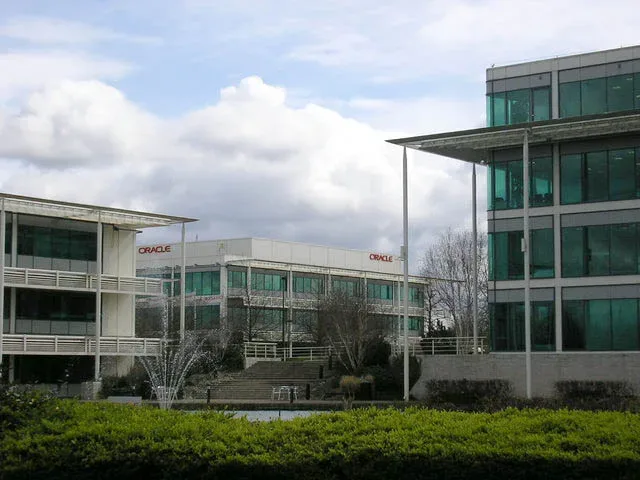
Reading’s identity is intrinsically linked to its status as a tech hub. Better co-ordination with the research excellence at Oxford and the burgeoning data centre metropolis in Slough could bring significant benefits, especially if you add in proximity to Heathrow and London. Reading has seen an exodus of tech companies recently, with major former employers like Microsoft down to one building on their former campus in Thames Valley park. But Reading is still home to some of the world's largest multinational corporations, with PepsiCo recently announcing that they will be moving their European HQ to Station Hill, our local economy is heavily dependent on the high-skill, high-wage sector. These companies value a flexible labour force and low cost energy, whereas Andy Burnham’s political DNA is firmly rooted in labour movements and traditional industrial heartlands. There is already a palpable tension between the 'Silicon Valley' model of the South and the 'Regional Industry' model of the North. If Burnham ascends, how does his government view the tech-heavy economy of Reading? Will we be seen as an area that needs more redistribution, or will he seek to harness our tech output to drive national innovation? His past comments suggest an appreciation for the 'Foundry' model—creating regional clusters of industry. Perhaps he will look to Reading not as a competitor, but as a model for how the rest of the country’s regional hubs should look, or perhaps not.
The fear remains that his government might implement tax or regulatory shifts that are designed to benefit the wider UK manufacturing base at the expense of our service-led economy. If the King in the North brings with him a fiscal policy that prioritises re-industrialisation, the service and tech sectors in the South might find themselves facing a more hostile tax environment. The jovial, if slightly grim, prospect is that the 'Thames Valley Tech Cluster' could become the golden goose that a Labour government might look to for funding its massive public sector expansions. It’s a classic story of the regional lord looking at the wealthy merchant town and deciding that its coffers should be a little more 'shared.' Whether this benefits Reading in the long run or stifles our growth is the billion-pound question that should keep us awake at night.
Health & Social Care
Burnham’s tenure as Mayor of Manchester was defined by his crusade for the integration of health and social care. He has been a fierce advocate for bringing power down to a level where it can actually make a difference to people's lives. In Reading, where our health services often feel stretched to the breaking point by the demands of a growing population and a housing market that puts pressure on local amenities, a Burnham administration could offer a paradigm shift. If he maintains this commitment, we could see a push for further integration between our local NHS trusts and the social care services managed by the council. Perhaps the rebuilding or redevelopment of the Royal Berkshire Hospital promised and then withdrawn by Boris Johnson and his successors will be back on the cards. RBC already spends three quarters of its budget on social care. There are few clues on how this may be alleviated.
Taxation
Which brings us to the issue that will inevitably impact all net contributors in our area - taxation. Britain has the highest taxes ever (apart from a brief period after the Second World War) and this is stifling our economy, innovation and investment. Yet Burnham has clearly stated that he will need to put taxes up. Your children are likely to pay higher inheritance taxes and income tax for those in higher wage brackets will go up. A review of all rating bands could be very expensive for householders in our area. There is little doubt that those with disposable income will have less under a Burnham government and that is likely to have a knock on effect on local businesses, restaurants, pubs and many other services already badly hit by large tax hikes directly and to their customers.
Education
Another pillar of the Burnham philosophy is the focus on education and skills development to suit local economies. He has spoken often about the 'digital divide' and the need to bridge it with local training schemes. Reading, with its wealth of high-tech firms, has a persistent skills gap; we import talent from all over the world because we struggle to train enough people locally. If a Burnham government decides to double down on regional skills development, Reading could benefit from a significant investment in our local college and university partnerships. Imagine a scenario where central government funds are specifically earmarked for tech-training centres in the Thames Valley, designed to funnel local youth directly into our high-growth job market. This would be a game-changer for social mobility in our town. It represents a shift from the 'university-only' pipeline to a more vocational, industry-integrated approach. reading is calling out for qualified, capable tradespeople. If Burnham can deliver on this, it could secure Reading’s status as a premier tech destination for decades to come, moving us beyond the current reliance on attracting talent from elsewhere. However, there is the irony that the University of Reading does not have a computing department and that the provision of training, apprenticeships and vocational is difficult. In Reading we offered vocational training to Reading College and we were told where to go. This is not an easy problem to solve.
Climate Change
Climate change is the backdrop to every political discussion now, and Burnham has been vocal about his 'Net Zero' commitments. He pushed for a green revolution in Manchester, focusing on everything from electric buses to building insulation schemes. Reading has its own ambitious climate goals, but achieving them requires more than just local ambition; it requires massive structural change and central government backing. A Burnham premiership could be the catalyst that unlocks funding for large-scale energy retrofitting of our older housing stock, turning our draughty, Victorian-era terraces into energy-efficient homes, perhaps all funded by a central 'green energy' grant managed by a regional mayor. However, the reality is that what most local people and businesses want to see is cheaper energy prices. It will be interesting to see where he goes with this.
Businesses
Finally, we must consider the business community. Reading’s business leaders have been remarkably resilient, but they are also a cautious bunch. A transition to a Burnham-led Labour government would create a period of intense uncertainty. Will his policies on employment law, corporate taxation, and business regulation stifle the very companies that have made Reading the success story it is? It is probable that we would see a shift towards a more 'co-operative' model of business, where corporations are expected to engage more deeply with the local community. This could be a positive for Reading, creating stronger links between our big tech players and our local schools and community projects. However, it also creates an environment of increased scrutiny. The 'King in the North' is not known for his patience with big business if he feels they aren't playing their part in the wider social fabric. It could be a period of significant tension, but also one of potentially deeper community integration.
The Wall
There is a danger that a 'King in the North' might be seen as a polarising figure from elsewhere. His positioning may be galling to a Southerner. Whilst his supporters see a man of the people, critics might paint him as someone who doesn't understand the specific pressures of the South. If the tone of his government is perceived as inherently hostile to the 'affluent South,' Reading could find itself in an awkward political position. Our town is already turning Green and Reform UK, as Wokingham has become a LibDem orange. Our region is already looking beyond Labour. We already have a Labour controlled council in town who might find it difficult to lobby for funding if the narrative from the top is 'redistribution to the North.' It would require a very skilled bit of local diplomacy to ensure that Reading is viewed as a partner in national growth rather than a competitor for limited resources. Reading will have to become much better at articulating its value to the national economy, lest we find ourselves on the outside looking in. One aspect that might help with this is that local Earley and Woodley MP Yuan Yang is close to Andy Burnham and, despite her slender majority and recent introduction as an MP, may become a minister in his government. She is a prominent leader of the Tribune group of MPs and is already a key policy contributor to Burnham’s campaign
The Red Wedding ?
We cannot discuss a potential Burnham premiership without addressing the elephant - or perhaps the dragon - in the room: the sheer volatility of British politics. We have had seven Prime Ministers in a decade. We have watched leaders rise and fall with the regularity of the seasons and incompetence, frustration and apathy have become rife. In an era of phenomenal change, the UK is clearly totally dependent on the US and its capricious orange leader for all major technologies. If Andy Burnham is to become the next monarch of the British political sphere, he is stepping into a landscape that is deeply cynical, exhausted by chaos, and desperately looking for a steady hand. Burnham rather proudly actually seems to see himself as the 'King in the North,' but the premiership of the UK is a different beast entirely. It requires juggling global geopolitics, a fractious parliament, and a public that is increasingly difficult to govern. When he takes over, can he remain in control when there are other issues such as immigration and potholes to sort out?
A Mancunian In The Thames Valley
There is a cultural element to the 'Burnham factor.' The man has a distinct style—a blend of Northern straight-talking and a slightly melancholic, oratorical grace. He doesn't shy away from confrontation with the centre, a trait that served him well in Manchester. If he becomes PM, he will likely bring a certain amount of this 'outsider's perspective' into the heart of Westminster. How does this translate to a place like Reading? We are a town that prides itself on being a cosmopolitan, diverse, and economically vibrant centre. We aren't Manchester - we don't have the same industrial history, but many Dings have a shared sense of frustration with the current state of British politics as the recent local government elections showed.
If the King in the North brings his brand of politics to the national stage, we might see a shift in the tone of the national debate towards regionalism. For Reading, this could mean an opportunity to redefine our relationship with the capital. Instead of being seen as an extension of London’s housing market, we might be encouraged to lean into our identity as a regional leader in our own right. This could spark a new wave of local cultural confidence. It’s an interesting prospect: a town that has historically looked towards the capital for its sense of purpose might find itself looking towards a government that is finally willing to empower the regions. Of course, the risk is that the culture clash between the 'Northern' political style and the 'Southern' economic reality results in a disconnect that leaves everyone unhappy. As they would say in Manchester: 'there's never a dull moment'....


Comments
No comments yet. Be the first to share your thoughts.
Join the conversation
Log in to leave a comment on inReading.