
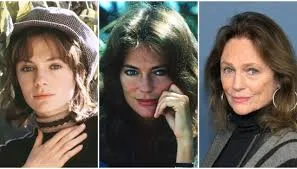
Winifred Jacqueline Fraser Bisset was born in Weybridge, in 1944, the daughter of George Maxwell Fraser Bisset, a GP, and Arlette Alexander, a lawyer-turned-housewife whose mother was of French and English descent and her father was Scottish descent. Bisset's mother cycled from Paris and boarded a British troopship to escape the Germans during the 1940 Battle of France.
Bisset grew up in a 17th-century country cottage called Lane End in Westwood Row, Tilehurst, along with her older brother, Max, now a US based business consultant. Her mother taught her to speak French fluently, and she was later educated at the Lycée Français de Londres in London. She took ballet lessons as a child and began taking acting lessons while working as a fashion model to pay for them. When Bisset was a teenager, her mother was diagnosed with multiple sclerosis and home life was described by her as ‘chaotic’. Bisset's parents divorced in 1968 after 28 years of marriage. During the height of her Hollywood career she regularly visited her mother in Tilehurst and owned the cottage until recently when it was sold with building permission for an additional detached house in the grounds that caused some local consternation.
In an interview in Bissett, described the cottage when she was a child as "chaotic", adding: "Not one newspaper that came into the house ever left it.
"There were masses of books everywhere and furniture enough for three homes. My brother and I were extremely upset by it - and have now turned into clean freaks."

With her alluring looks, Hollywood noticed her quickly. The late 1960s were a period of transition: the studio system was weakening, youth culture was ascendant, and American cinema was tentatively allowing women to appear less polished and more real. Bisset, with her unforced glamour and faintly European bearing, fit the moment perfectly.
Her breakout roles—The Sweet Ride (1968), Bullitt (1968), and Airport (1970)—placed her squarely in the public eye. In Bullitt, she plays opposite Steve McQueen, and what lingers is not just her beauty but her calm. Where many actresses of the era projected need or seduction, Bisset projected self-possession.
Yet Hollywood never quite knew what to do with her. She was too intelligent to be decorative, too sensuous to be academic, too independent to be reliably pliable. She worked constantly, but not feverishly; successfully, but not obsessively. Unlike many contemporaries, she did not build a persona around scandal, reinvention, or public confession. She remained, by design or instinct, slightly out of reach and very private, often returning to stay and look after her mum for months at a time at her childhood home.
By the 1970s, Bisset had begun to drift—purposefully—toward Europe. Films such as Day for Night (1973), directed by François Truffaut, placed her inside a different cinematic tradition, one less concerned with star power and more interested in process, ambiguity, and emotional texture. Her performance is subtle, even self-effacing, and that is precisely the point: she becomes part of the film’s rhythm rather than its focal glare.
This European turn was not an abandonment of Hollywood so much as a widening of possibility. Bisset seemed to understand earlier than most that longevity for women in film required mobility—across genres, across languages, across expectations. She acted in Italian, French, and British productions, choosing roles that allowed her to age onscreen without apology.
There is something quietly radical about her career. At a time when actresses were expected to either freeze themselves in time or disappear, Bisset allowed herself to change. Her voice deepened. Her face softened. Her performances became less about being seen and more about seeing.
She appeared in films that were forgotten and others that endured. She moved easily between romance, thriller, drama, and television. She cultivated a kind of professional equanimity—an acceptance that allowed her to continue working without desperation.
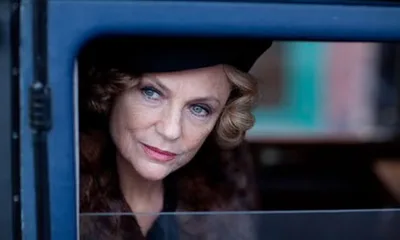
This patience was rewarded. In 2014, when she won the Golden Globe for her role in the BBC miniseries Dancing on the Edge. Her acceptance speech—unguarded, rambling, sincere—went viral. It was the opposite of polished. She spoke about love, self-doubt, perseverance, and the difficulty of being kind to oneself. In a culture obsessed with rehearsed gratitude and brand-safe emotion, her speech felt almost shocking in its honesty.
Bisset has never married and has no children, but had long-term romances with Canadian actor Michael Sarrazin, Moroccan real estate magnate Victor Drai, Russian dancer/actor Alexander Godunov, Swiss actor Vincent Perez and Turkish martial arts instructor Emin Boztepe. And she is Angelina Jolie’s godmother. She has often spoken candidly about the choices and compromises of a life devoted to work. At 81 she now lives in Beverley Hills and is a less frequent visitor to her roots in Reading, but continues to act, with her most recent role in the Western, Long Shadows, released in November 2025.



Comments
No comments yet. Be the first to share your thoughts.
Join the conversation
Log in to leave a comment on inReading.