

As an indication of the changing nature of our town St John's church on Queens Road is now the Amazing Grace Chinese church and adjacent on Watlington Street is the impressive former Wesley Methodist Church, now the Polish Sacred Heart church. Both buildings are impeccably looked after, unlike many other historical buildings.
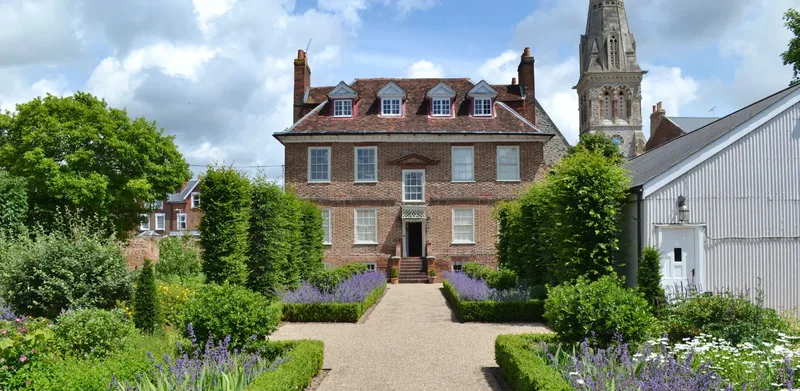
Tucked away between them, just off the IDR and beyond the Lyndhurst pub, Watlington House is an iconic building with a lovely formal walled garden. It has a long and varied history and remains one of the best preserved historical buildings with a garden in the town. It is Grade II* listed and is recognized as the oldest surviving secular building in Reading.
In 1688, Samuel and Sarah Watlington, affluent cloth merchants, laid the foundation for the house's western section (seen above). It is believed that some of the stone used was from the ruins of Reading Abbey. Samuel was twice mayor of Reading. (Sarah has incorrectly been called Anne in some histories).
The eastern section, with its grand façade looking onto Watlington Street, was added in 1763.
It was rented by Captain Edward Purvis in 1794, who was known for fighting in the Battle of Corunna during the Peninsular War and training the Berkshire Militia. Rumor has it that his ghost, clad in his redcoat, still roams the halls, a silent guardian of bygone days. It remained as a home to local dignitaries until the end of the 19th century and in the 1870s was used briefly as the Town Clerk's office while the municipal buildings were being altered.
In 1877, the newly founded Kendrick Girls' School established its first home within the house's walls, with a corrugated school hall erected in the walled garden. This still stands as The Graden Room and was used as a vaccination point during the Covid pandemic. The school remained there until 1927, when it moved to its current location nearby.
1929 Reading Borough Council decided to sell the then-empty building, and in order to save the house from threatened demolition, a voluntary committee was formed by local architect C B Willcocks to raise funds to buy and restore it. Ownership was vested in the National Council of Social Service and it was placed in a trust which included a requirement for the Society for the Protection of Ancient Buildings to inspect its condition regularly.
In 1931, the Watlington House Trust purchased the property, dedicated to preserving the building's architectural integrity and ensuring its continued use for the benefit of the community. It currently houses a number of local non-profit organisations, including The Mills Trust that holds historical records on the country’s mills.
The house and gardens are not generally open to the public. However, Watlington House Trust took part in Heritage Open Days in 2023 so hopefully they will do so again in the future.


Comments
No comments yet. Be the first to share your thoughts.
Join the conversation
Log in to leave a comment on inReading.