
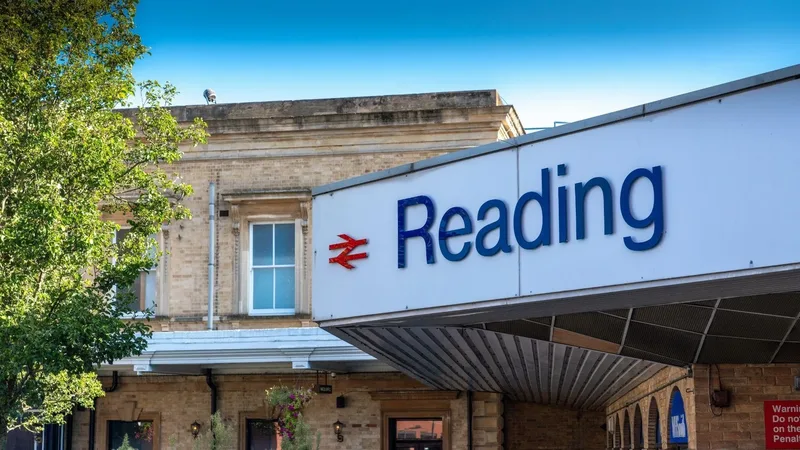
Last month a Reading-based battery train shattered the world record with 200-mile journey. It's the two hundredth anniversary of passenger trains in Britain, so this month we take a deep dive into the history of railways in Reading.
GWR has made history by setting a new world record for the longest distance travelled by a battery-electric train on a single charge. The record-breaking journey started and finished in Reading and saw the train cover an impressive 200 miles without external charging.
The Class 230 unit, a converted former London Underground train, embarked on an overnight trip from the Reading Train Care Depot. The route took it to London Paddington twice, as well as Oxford, before returning to Reading. The achievement, verified by the Rail Performance Society, surpassed the previous record of 139 miles set in Germany in 2021.
This significant milestone was achieved during a landmark year, as the UK celebrates the 200th anniversary of the modern railway.
According to a GWR spokesperson, the record-breaking run was not just a stunt, but a vital demonstration of the potential for battery technology to replace older diesel-powered trains on the network.
The train, which is part of an ongoing trial of GWR's fast-charge technology, completed the journey with a significant amount of charge remaining, suggesting that even longer trips are possible. The successful run provides a strong case for the future viability of battery trains, particularly on routes where full electrification is not practical.
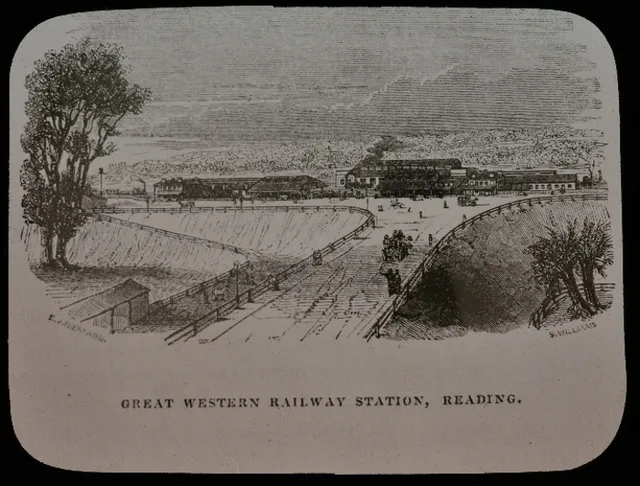
The first Great Western Railway trains steamed into Reading in March 1840, few could have imagined just how profoundly they would shape the town’s future. Reading was already a thriving market town able to use both its rivers and the Kennet & Avon canal for transportation was on the main artery between London and Bristol, at the heart of Isambard Kingdom Brunel’s grand vision of a 'great western railway'. The canal had only been completed in 1810 and 1840 was its most profitable year, carrying over 300,000 tons of goods on water through the town. But this was soon to change.
The construction of the line through Reading began in the late 1830s. The process was a massive undertaking, employing thousands of navvies (short for 'navigators') who were the backbone of Victorian engineering projects. These were not local men but a transient workforce that lived in temporary camps, often in rough conditions.
The navvies who built the railway through Reading in the 19th century were a vast, itinerant workforce drawn from rural England and Ireland, driven by the need for higher wages and opportunities as agricultural jobs dwindled. These men were known for their remarkable physical endurance and were expected to move as much as 20 tons of earth a day, often using nothing more than picks, shovels, wheelbarrows, and dynamite.
Navvies lived in makeshift encampments or wooden shanties near the worksites, sometimes with their families, though many were single and lived in communal dormitories, depending on landladies for cooked meals. Their clothing, as described by Terry Coleman, was distinctive: “moleskin trousers, double-canvas shirts, velveteen square-tailed coats, hobnail boots, gaudy handkerchiefs and white felt hats with the caps turned up”- many known only by nicknames like Gipsy Joe or Fighting Jack. The presence of such a large, transient workforce left a noticeable mark on rural life in Reading and other towns, as their settlements resembled gold rush camps. Local stories often portray their reputation for hard work, heavy drinking, and boisterous behavior, with “going on a randy” being common after payday.
Despite frequent injuries and even death, Elizabeth Garnett famously remarked, “Certainly no men in all the world so improve their country as navvies do England. Their work will last for ages and, if the world remains so long, people will come hundreds of years hence to look at and wonder at what they have done”. The construction of the railway through Reading was as much a feat of human endurance and spirit as of engineering genius, and the stories and lives of these nameless, laboring men remain woven into the very tracks they laid.
One of the most significant engineering challenges was building the viaduct over the River Kennet. This structure, designed by Brunel, was crucial for bringing the railway into the town. It was a substantial brick arch bridge, built to withstand the frequent flooding of the Kennet and to carry the immense weight of the locomotives. The construction of the bridge and the cutting and embankment through the town was a major disruption, requiring the demolition of some existing buildings and the rerouting of local roads. (There remain only three main roads that cross under the rail line to this day, adding to the town's traffic issues.)
The location of Reading Station itself was a strategic decision. Brunel chose a site just south of the town center, a decision that would eventually turn a quiet area into a bustling commercial hub. The station's construction was relatively simple compared to the viaduct, but its purpose was to be a gateway to the town and beyond.
The Great Western’s broad-gauge tracks brought both prestige and controversy. For two decades Reading was caught up in the “Gauge Wars,” the battle between Brunel’s wider tracks and the standard gauge adopted by other railways. It was a time of intense rivalry, but the outcome was never in doubt: standardisation arrived in the 1860s, allowing seamless travel far beyond the GWR’s original empire.
The first ever public train from Reading to Paddington sets off at 6am, drawn by steam locomotive Firefly. The fastest journey to London was recorded at one hour and five minutes.
The arrival of the railway had a profound and immediate impact on timekeeping in Reading, just as it did across Britain. Before 1840, time was a local affair, governed by the sun. Each town kept its own local time, which was often slightly different from its neighbors. For example, Reading's local time was about four minutes behind London's. This system worked well enough when travel was slow and local.
The railway's need for a standardized, precise timetable made this local variation in time unworkable. A single railway line needed all its stations and signal boxes to operate on the same time to ensure safe and efficient travel. In November 1840, the Great Western Railway (GWR) became one of the first companies to impose a single standard time across its network. They adopted London Time (the time kept at the Royal Observatory in Greenwich, which would later become Greenwich Mean Time or GMT) as the official "railway time."
This meant that clocks at Reading's new station were set to London Time, which was four minutes ahead of the local time. This created a dual-time system in the town: a "railway time" for all train-related business and the traditional "local time" that most people continued to follow in their daily lives. This was a source of great confusion, with some public clocks and watches showing local time while the station clock showed railway time.
By 1855, the majority of towns and cities in Great Britain had adopted London Time, largely due to the influence of the railways. It wasn't until 1880 that the British government passed the Statutes (Definition of Time) Act, officially making GMT the legal standard time for the entire country. The railway's need for punctuality and standardization had, in effect, forced a nation to align its clocks and unify its time.

The expansion of the railway was rapid. By the mid-nineteenth century, Reading had lines not only west to Bristol and Wales but also east and south to Guildford, Reigate, Basingstoke and beyond. The South Eastern Railway and later the South Eastern and Chatham Railway added important cross-country connections, while the Great Western deepened its dominance with services to Oxford, Newbury and Didcot.
Reading’s railway stations have been pivotal to the town’s identity and historical development, with the first Reading station opening on 30 March 1840 as a temporary terminus for Brunel’s Great Western Railway (GWR). The new rail link dramatically reduced travel time to London to just over an hour—revolutionizing commerce, communication, and everyday life for locals.
A permanent GWR station soon followed and expanded, becoming a central hub on the vital London–Bristol route. The original station, designed by Brunel, featured single-sided platforms and separated up and down lines, typical of early Victorian railway architecture.
As railway networks grew, Reading became served by competing lines. The South Eastern Railway opened Reading Southern station in 1855, connecting the town with the south coast and London Waterloo. This station was built near the GWR site and operated independently for more than a century, before its closure to passengers in 1965, when services moved to the larger “General” station. The consolidation of services helped cement Reading’s status as a major rail interchange.

Over the decades, the main station has undergone several transformations. A major redevelopment in 1989 saw the creation of a new concourse and expanded platforms, reflecting ongoing growth in rail traffic and Reading’s importance in the national network. Today, Reading Station is famed for its size (with 15 platforms) and vital position on routes linking London, Bristol, the south coast, and the Midlands. Major anniversaries, such as its 180th and 185th birthdays, have been marked by local pride and reflection on its role in uniting people and industries across Britain.
Reading West Station on Oxford Road was opened on July 1, 1906. To serve as a local stopping service towards Basingstoke, Newbury, and destinations in the Thames Valley.
The newest station in the town is Reading Green Park , opened on May 27, 2023. Situated in the new and developing Green Park business and residential area, it provides access the Select Car Leasing Stadium, home of Reading FC on the Reading to Basingstoke line.
Tilehurst station served the suburbs along the River Thames west of Reading, on the western main line between Reading and Pangbourne. It was opened in 1882 and has four platforms set next to the river.
Earley station serving the suburbs of the same name, opened in November 1863 on the South Eastern Railway, originally as part of the Reading, Guildford and Reigate Railway. Today it is managed by South Western Railway and is the last stop before Reading on the route to London Waterloo. Earley station features two platforms and a substantial station building, with staff cottages still in use nearby
Freight grew as fast as passenger traffic. Coal, food and manufactured goods poured through the town, while Reading’s own industries—most famously Huntley & Palmers biscuits, whose factory opened the year after the arrival of the railway —thrived on the speed and reach of the new transport system.
The story of Reading’s railways was not confined to the mainline. By the late nineteenth century, a network of private railways and sidings threaded through the town’s industrial heartlands, linking factories and warehouses directly to the national system. The most celebrated of these was operated by Huntley & Palmers, the world-famous biscuit manufacturer whose giant factory complex dominated the town’s economy for more than a century.

At its peak, Huntley & Palmers had an internal railway system with more than two miles of track and its own fleet of small steam locomotives, affectionately nicknamed by workers. These engines shunted wagon-loads of flour, sugar and other raw materials around the factory, while completed tins of biscuits were rolled out to the company’s private sidings at Reading General station. From there, Huntley & Palmers’ products were dispatched across Britain and exported to every corner of the globe.
The railway within the factory grounds was so integral to operations that it was often said a biscuit could be mixed, baked, packed and loaded onto a train without ever touching the road. Visitors to Reading in the late Victorian period would have seen constant movement of wagons bearing the Huntley & Palmers name, a symbol of the town’s industrial might.

Huntley & Palmers was not alone. Other industries, including Simonds Brewery and various seed merchants, also operated private sidings. These ensured a seamless flow of goods into and out of their premises, knitting Reading’s industries tightly into the railway network. Although the last of these sidings disappeared with the decline of heavy industry in the late twentieth century, they remain an important reminder of how deeply the railway was woven into the fabric of Reading’s commercial life and the old Huntley & Palmer railway tunnel off Napier Road was recently reopened as a pedestrian tunnel linking the rapidly developing Kenavon Drive area to Kings Meadow and the River Thames
In the early twentieth century Reading had become a major Great Western hub. Extensive goods yards, sidings and locomotive depots sprawled to the south of the station, while the flow of commuters into London Paddington steadily increased.
Nationalisation in 1948 folded the railways into British Railways, Western Region. Steam locomotives slowly disappeared, replaced first by diesel multiple units and later by high-speed InterCity trains. Electrification arrived in the 1970s, transforming the commuter line to Paddington. By the late twentieth century Reading had become one of the busiest junctions in the country, but it also gained a reputation for congestion. Platforms were crowded, timetables stretched to breaking point, and the layout of the tracks left little room for manoeuvre.
Privatisation in the 1990s split operations among new companies, with Great Western Trains (later First Great Western and now once again Great Western Railway) taking long-distance services, and Thames Trains handling local routes before being re-absorbed. South West Trains kept its long-standing Waterloo connection. Passenger numbers soared, but so did the bottleneck at the station.
Relief finally came with the £850 million redevelopment project of the early 2010s. Over five years Reading was transformed. New platforms rose to the north, a vast transfer deck linked every part of the station, and a flyover untangled the snarled approaches. When the project was completed in 2015, Reading had emerged as one of Britain’s most modern and efficient interchanges.

The twenty-first century brought another change of status: Reading was chosen as the western terminus of the Elizabeth Line. Since 2019, commuters have been able to step aboard trains that run not just to Paddington but directly through central London to Canary Wharf, Abbey Wood and even as far as Shenfield in Essex. It is a symbolic reminder of how deeply the town is now tied into the capital’s orbit.
Today Reading stands as one of the busiest rail centres in the country outside London, with over fifteen million journeys passing through each year. Great Western Railway continues to carry passengers westwards to Wales and the West Country, while CrossCountry links the town northwards to Birmingham, Manchester and Scotland. South Western Railway maintains its line to Waterloo, and the Elizabeth Line embeds Reading in the daily rhythm of London life.
From Brunel’s broad-gauge experiments to Crossrail’s sleek electric trains, the history of Reading’s railways is the story of a town reshaped by the tracks that run through it. What began as a stop on a pioneering route has become a national hub, a place where east meets west and north meets south. The iron road not only brought prosperity and growth but continues to define Reading’s identity in the modern age.
Railway Stories
Here are some funny and interesting facts, stories, and anecdotes related to Reading’s railways:

On March 24, 1840, just six days before the opening of Reading railway station, a freak whirlwind or mini-tornado struck the station while it was still under construction. A 24-year-old carpenter named Henry West was working on the station roof fixing glazing at the time. The powerful wind lifted off a four-ton section of the roof, carrying it and Henry West approximately 200 feet away. Sadly, Henry was hurled to his death, and his broken body was found in a ditch some distance from the site. This extraordinary accident is commemorated by a brass plaque on the main station building and by a wooden memorial (referred to as a "rail") placed on his grave at St Laurence churchyard in Reading, maintained over the years by his family and the town council.
In the late 19th century, Reading Station was described as “a series of dirty wooden sheds” by the local newspaper. It’s hard to imagine now, given the upgraded concourses and shiny platforms. The station’s historic Three Guineas pub was once the GWR booking office.
On Christmas Eve 1869, Charles Dickens was expecting his Christmas turkey to arrive by train. Instead, the goods van approaching Reading caught fire and parts of the charred turkey were sold off at sixpence a piece.
When Oscar Wilde was sent to Reading Gaol in 1895, he passed through Reading Station in handcuffs and a prison uniform—surely one of the more unusual ‘celebrity sightings’ in its history.

Michael Bond, the creator of Paddington Bear, grew up in Reading. He loved watching trains at Reading Station and famously used his memories of child evacuees arriving there during WWII as inspiration for the first Paddington book. Bond once got caught in a bombing raid while installing radio equipment during the war, and boards the bus completely covered in dust - no one wanted to sit near him, which he found quite funny in retrospect.
In 1939, more than 12,000 children arrived at Reading Station to escape the London Blitz. One of them inspired the lovable animated character Paddington Bear after Bond watched evacuees waiting on the platform.
Staff and passengers have always created their own brand of fun. One locally famous story recalls early railway workers aiming lumps of coal at milk bottles perched on backyard walls as trains rattled past. Residents would gather up coal for their fires, unknowingly benefiting from this unofficial “game”.
Children growing up near the lines saw the railway as a playground, making dens in wagons, getting filthy, and occasionally being told off by railway police for playing dangerously close to the tracks.
Reading Station has its random quirks: in recent years, with a piano appearing on the top concourse as part of a charity event.

Comments
No comments yet. Be the first to share your thoughts.
Join the conversation
Log in to leave a comment on inReading.