
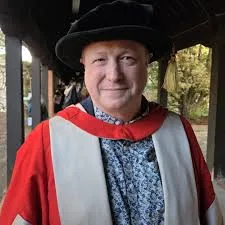
Our colleague Phil Creighton, former editor of reading Today and Wokingham Today and a journalist and editor in Reading for most of his career was last month awarded an Honorary Degree of Doctor of Letters by Reading University in December for his contribution to journalism in our town. Here he reminisces about the changes local media has gone through over the past decades.
What’s black and white and read all over? A newspaper from 30 years ago.
When I came to Reading for university back in 1996, the town was served by the Evening Post, the Chronicle, the Standard, and Midweek. Newspaper vendors would be telling us to read all about it at various points in the town centre, while the former printworks of one title had long been converted into a restaurant.
Students at the University of Reading were able to create their own newspaper, Spark, and it was here my career started.
Add in to that mix Blast, a community radio station run by Reading College, and cable TV company Telecential had its own station for the Thames Valley.
Quite the mixed media.
Last month, the University of Reading conferred an honorary doctorate on me for my journalistic career, which started with its student newspaper, Spark. Printed at the Evening Post, this became a calling card and, in the summer of 1997, I joined its ad setting department before moving to editorial on graduation. Since then, I’ve worked for The Baptist Times, made regular appearances on BBC Radio Berkshire and Premier Radio and, when The Wokingham Times closed in 2014, launched The Wokingham Paper.
For communities to stick together, they need three glues: a strong local newspaper, good pubs, and great community hubs such as places of worship, clubs and village halls. The three go hand in hand, with newspapers acting as the mouthpiece for communities, able to ask the awkward questions, celebrate the good times, and walk alongside people during the bad.
And there have been some bad times. During my stint in the world of local news, I’ve seen – among others – the Paddington railway disaster, 9/11, the Forbury terrorist attacks, several major fires, and Ruth Perry’s death following an Ofsted inspection. On each occasion, restrained and measured coverage has helped communities grieve while sharing accurate and impartial information.
That has been my guiding philosophy, and while I may have worked on different publications, my journey has spanned the immense changes the media industry has seen over the past three decades.
Back in 1996, there were still some hot metal newspapers in existence: I visited one for dissertation research. These were typeset using individual lines of type cast from molten lead. The method dates back hundreds of years, is labour-intensive, and is less flexible than more modern methods that involve computers.
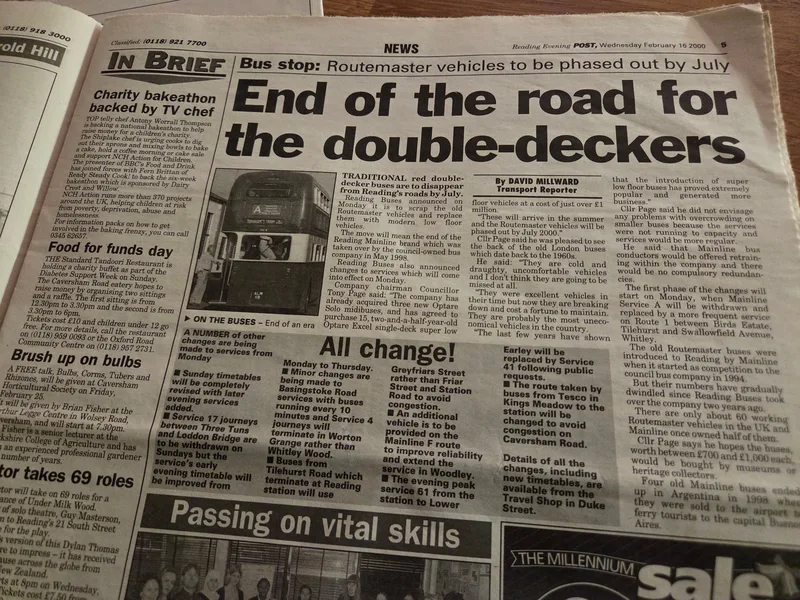
The Thames Valley has always been part of the UK’s Silicon Valley, so it should be no surprise that when it launched, the Reading Evening Post was one of the most technically advanced newspapers in the country. It was able to print full colour at a time when most printing presses were black-and-white, and its print room technicians were among the best in the land. They were proud to show me the full-colour broadsheet page they produced for the 1969 moon landings. No computers or AI to do the heavy lifting – they had to prepare the colour plates by hand. Their work was spot-on, and many Reading households will have kept it as a souvenir of this historic occasion.
We forget just how much more a newspaper is than a physical product. The Evening Post was very much part of the fabric of Reading, employing several hundred people, printed on site and ensuring reporters attended events, while editors were on the board of many initiatives including Reading UK CIC (what is now REDA), the SeniorSafe campaign, launching the annual Pride of Reading awards, and sponsoring many events, including the annual sports awards.
Shops all over the town would have Evening Post branding and billboards, while the company’s vans would be an ever-present sight on the roads. On Tuesdays, there were queues outside estate agents as househunters sought the latest listings from its property guide.
While people say it was the Internet, still very much in its infancy back in 1996, that transformed the way we relate to local newspapers, it was actually access to home broadband that was the difference.
Back in 1996, to surf the World Wide Web, you either used a modem that hogged the telephone line or fitted an ISDN line. It was NTL (now Virgin Media) that changed this, installing the first broadband line in a residential home at the turn of the 21st century. The speeds were slow – 128Kbps was barely faster than dial-up, but it was enough to see the tide turn. In 1998, just 9% of UK households had access to the internet. Now, fewer than 1 in 20 homes are without a digital connection.
Online portals became the norm: why wait until Tuesday for the latest homes on sale when you can see them instantly on sites such as RightMove and Zoopla? And so began the upheavals that have ruptured local news as we know it.
The changes to the Reading Evening Post have been marked. Back in 2009, as part of a cost-cutting measure, it went twice weekly: Wednesdays for the Reading Post, while Friday’s edition was named after the website, Get Reading. Another round of redundancies followed; The Wokingham Times office closed, and those left had to work harder just to stand still.
Ultimately, in 2014, a decision was made to go online-only, but without a printed presence, GetReading's influence diminished; it was now one voice among many, and several name and format changes diluted that voice further. It currently exists as a Facebook page that reprints syndicated copy relevant to Berkshire.
With a desire to focus on the largest possible online audience for each story, what had been traditional bread and butter for local news has been eschewed: jumble sales, Women’s Institutes and Rotary Clubs, ribbon cuttings, and children’s activities have all fallen by the wayside. The days of a local newspaper being the first draft of an area’s social history are diminishing.
At the same time, the new ways of doing local news are exciting. The hyperlocal movement – independent publications – allows smaller organisations to excel in a niche. The cost of putting a website together is negligible compared to running a daily newspaper, and there are different ways to reach audiences; news doesn’t have to be a website, it can be social media channels such as TikTok videos or WhatsApp communities. Whereas once reporters would telephone the office to dictate their stories, now they can create videos using their mobile phones and publish directly from the scene.
And it is more instant. Mobile computing means no more waiting for the presses to roll, as stories can be published instantly to a broader audience. For any journalist, immediacy is exciting.
What does the future hold? Printed newspapers are becoming a rarity. In 1996, there were approximately 1,600 newspapers in the UK, but this has dropped to around 880 this year. That’s a massive reduction, and it is expected to go down even further in the years ahead. When WHSmith/TG Jones relegates news titles to the back of the store and other hidden corners, it seems the direction of travel is only going one way.
Could they stage a revival in the same way that vinyl and even cassette tapes have? Possibly. But it would require a concerted effort from all involved to point out that, as the old News of the World slogan went, all human life is here.
The awarding of the honorary doctorate has been an opportunity to look back and reflect on a long career, one that has weathered changes that seemed unthinkable in the pre-Internet days. The industry has evolved over the past three decades and will continue to do so, but the need for quality local journalism has not changed – nor will it.

Comments
No comments yet. Be the first to share your thoughts.
Join the conversation
Log in to leave a comment on inReading.