

Is there any point in voting for lo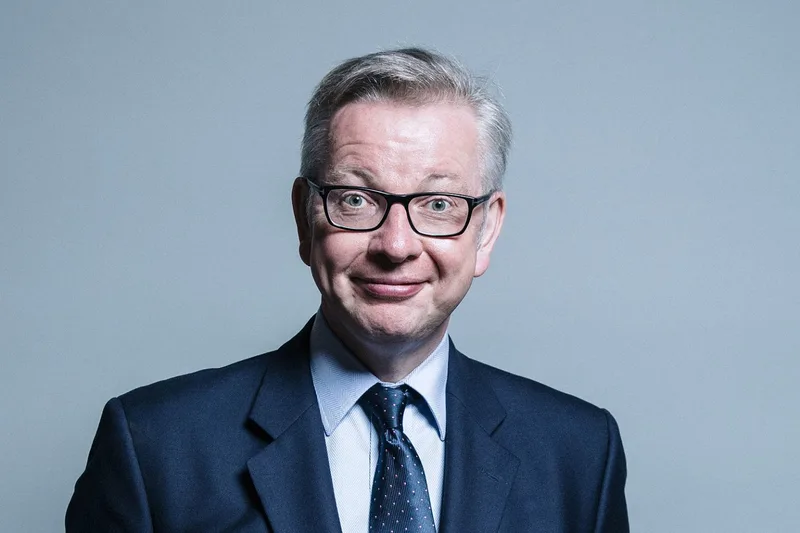 cal representation when we have King Mike ruling the roost ?
Is Reading being run by proxy by a person who has not visited the town in over a decade ?
As yet another local planning decision by local planners is over-turned by our zealous Housing Secretary - this time The Station Shopping Park on Vastern Road where The Range, Majestic Wine, Aldi and TFI Fridays currently trade - local councillors are up in arms. Local planning officers, who considered the development to be excessive for the location, were ignored and the development by pension giant Aviva, will now to forward to detailed planning for the site.
This follows another recent decision to restrict Reading Borough Council's plans to restrict permissible development conversions, which they claim has starved the council of it has lost £3.5 million in off-site contributions to affordable housing and £4 million in developer contributions since 2013.
You may also recall that it was Michael Gove who sat on any decision about Reading Gaol when he was Justice Minister.
With local about to go to the polls in May to re-elect a third of our local councillors, and as both the leader of RBC and the Mayor retire, you have to ask what purpose local democracy has if major decisions about landmarks such as Reading Gaol and planning for major new developments in the centre of town have been taken out of the control of local councillors ?
The local elections, where sixteen out of the 48 local councillors in Reading will be up for grabs, will be followed by a General Election later this year where new boundaries come into play for the first time.
Michael Gove has served as Secretary of State for Levelling Up, Housing and Communities and Minister for Intergovernmental Relations since October 2022. He ran unsuccessfully against Boris Johnson for leader of the Conservative Party after a startling betrayal of his old chum. InReading believes that his last visit to the town was to open Reading University's Institute for Education in 2012.
So why are so many seminal decisions taken away from the hands of the Council in Reading?
Well the balance of local and central authority has been a point of contention since Magna Carta and has shifted in favour of central government in recent years.
The power Mr Gove has to influence local decisions starts with the stipulation of Local Plans. Any authority not producing Local Plans to the liking of central government can be heavily sanctioned. After all, ensuring consistency in planning across the country makes a lot of sense.
In recent times this has been used as rod to ensure that planning targets for new homes are set and adhered to. As a result, central Reading alone has currently around 10,000 new housing units in development, very few of which are council built or affordable homes (see below for inReading's map of developments). Moreover Reading is designated an 'Urban Uplift' area and is required to build 35% more housing than nearby areas without this designation.
Permitted Development is another contentious idea that has eminated from central government and seen a run-in between central government and RBC.
This is a concept that was introduced after World War Two to bring housing stock back into use without the need for onerous planning. However, more recently it has been used to allow developers to convert office blocks to apartments with little planning oversight (although they do, supposedly, need to adhere to building regulations).
Many offices down the London Road have been converted using this legislation, and given the tremendous number of empty offices in Reading in our post lockdown era, this is obviously of concern.
In addition to the Local Plan and Permitted Development, in the UK, the Secretary of State for Housing, Communities and Local Government has ultimate responsibility for:
Call-in Power - the power to "call in" a planning application for their own determination, instead of letting the local planning authority decide. This usually happens if the proposal is deemed to have more than local significance, if it raises new or complex issues of development control, or if it conflicts with national policies in significant ways.
Planning Appeals - if a local planning authority refuses planning permission or fails to decide on an application within a specified time frame, the applicant can appeal to the Secretary of State. The Planning Inspectorate, acting on behalf of the Secretary of State, will then consider the appeal, which may involve written representations, hearings, or a public inquiry.
National Planning Policy Framework (NPPF) -the Secretary of State issues planning policies for England which local planning authorities must take into account when making their decisions. If a local decision significantly diverges from these national policies, the Secretary of State has more grounds to intervene.
Recovery for Decision - this is where the Secretary of State decides to determine an appeal themselves instead of leaving it to an Inspector. This is typically reserved for cases of major importance.
Policy and Direction - the Secretary of State can issue policy statements and guidance that local authorities need to follow. They can also set broader planning strategies that shape local decisions.
With a declining birth rate but a rising population (see related article), it has to be asked if these developments are what the town needs over coming years ?
Of course there are wider discussions that need to be had regarding the centralisation and devolution of power and about the kind of housing that a town like Reading needs (and why). We have two sets of elections this year where we can contribute to this agenda. Now is the time to start asking the right questions of our elected representatives.
As a footnote, Open Democracy reported in 2020 that the Tories had been given over £11m in contributions by property developers for that year.
Reading: Up to 1,000 homes approved after planning reversal - BBC News
Rule allowing more flats to be built in Reading blasted | Reading Chronicle
Exclusive: Property tycoons gave Tories more than £11m in less than a year | openDemocracy



Comments
No comments yet. Be the first to share your thoughts.
Join the conversation
Log in to leave a comment on inReading.