
In January, after having too much water in the form of endless rain and flooding, many people in Reading were left without any water in their taps. Area after area lost pressure and then water supply. The company execs were berated by Reading Borough Council, who accused them of being shameless.
There was natural anger throughout the town. Water (and sewage) is something we take for granted - until there is too much or too little of it, but it may just be time to get very worried as UK water companies have racked up £56 billion in debts.
What is going on and are we in danger of losing our water supply on a permanent basis ? Let's take a deep dive (so to speak)...
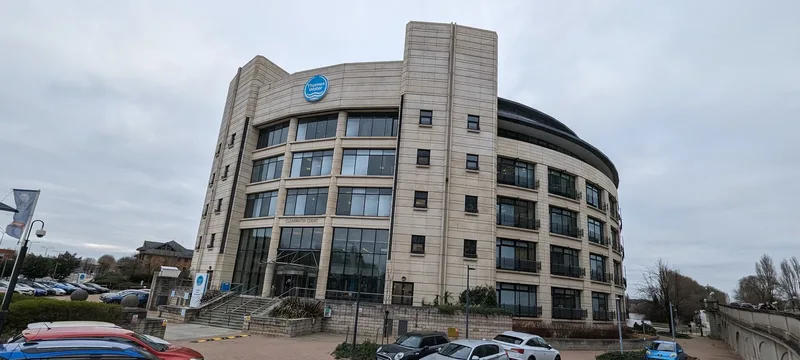
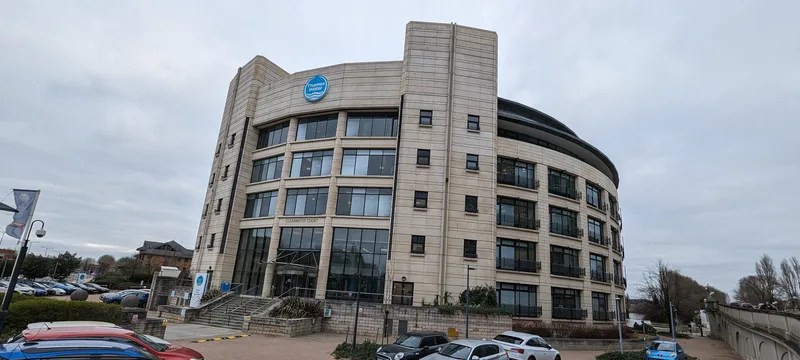
The provision of water and water treatment in our area is provided by Thames Water, which is also a major local employer with its headquarters next to Reading Bridge, in a building somewhat ironically called ‘Clearwater House’. And the company is in deep doodoo, with debts of over £15 billion, or around £1,000 for each of its 15 million customers (that’s us…). The trouble is that customers are also literally in deep sewage as discharges increase unabated into our local rivers. See the map below for what is happening just now.
Surely charging for water should be a profitable business? It appears not, despite 7.5% price rises last April.
This a story literally swimming in debt, neglect and sewage.
To understand what’s gone so wrong, you have to turn the clock back awhile. So, let’s start with some history.
Looking Back In Anger
Thames Water can trace its history back to the construction of the New River, which was started in 1604 to carry fresh water from Hertfordshire into London. Back then water companies were private companies, but the rapid growth of London resulted in the New River Company and eight other water companies serving London being taken into public ownership under the control of the newly-founded Metropolitan Water Board in 1904.
Fast forward to 1973, the MWB transformed into the Thames Water Authority, assuming responsibility for both water supply and wastewater services in a wider region beyond London, encompassing the Thames Valley and Home Counties.
The UK had a pretty decent water service, the odd hosepipe ban notwithstanding. Then came the drive to sell off all of the UK’s utilities with privatisation under the Thatcher Government.
In 1989, the Water Act privatized the water industry in England and Wales. The TWA's water and wastewater functions were separated, with Thames Water Utilities Ltd acquiring the former and focusing solely on delivering these services.
At the same time, responsibility for navigation, regulatory, river and channels management was transferred from the Thames Water Authority to the National Rivers Authority, which later became part of the Environment Agency (As many of you will know, these organisation now have headquarters a hundred yards apart on the River Thames in Reading).
Thames Water, was, and is, responsible for the water supply and waste water treatment in most of Greater London, Luton, the Thames Valley, Surrey, Gloucestershire, north Wiltshire, far west Kent, and some other parts of England; like other regional water companies, it has a monopoly in the regions it serves.
To supply water to its 15 million customers in the South East of England, Thames Water manages a complex network of reservoirs, treatment plants, pumping stations, and pipes spanning over 13,000 miles. The company sources water from a variety of sources such as the River Thames, groundwater, and treated wastewater. It also has two desalination plants and a network of smaller reservoirs.
The UK government maintained a "golden share" in TWUL until 1995, which restricted any single entity from acquiring more than 15% of voting shares. However, TWUL was subsequently acquired by the German utility company RWE in 2001.
In 2006, after allegations of neglect and under-investment that will be familiar to us all, RWE sold TWUL to a consortium led by the Australian investment bank Macquarie Capital Funds for £5 billion.
Macquarie's strategy aimed at aggressive cost-cutting and debt financing, raising concerns about potential service reduction and increased financial risk. This period witnessed high customer dissatisfaction and environmental controversies which persist to this day. Under Macquarie debts more than tripled from £3.2bn to £10.5bn (unadjusted for inflation). Meanwhile, £2.8bn was paid to shareholders in the form of dividends.
In 2006, Macquarie sold TWUL to Kemble Water Holdings, a consortium comprised of multiple institutional investors, such as Borealis Infrastructure, Canada Pension Plan Investment Board, and Abu Dhabi Investment Authority, for £8 billion.
As of 2023, the largest shareholder group in Kemble Water are Canadian pension fund OMERS (32%), the Universities Superannuation Scheme (USS - 20%), Infinity Investments (a subsidiary of the Abu Dhabi Investment Authority) (10%), British Columbia Investment Management Corporation (9%), Hermes Investment Management (manager of the BT Pension Scheme) (9%), the China Investment Corporation (9%), Queensland Investment Corporation (5%), Aquila GP Inc. (5%), and Stichting Pensioenfonds Zorg en Welzijn (2%) (percentages have been rounded), making the company over 70% foreign owned. In fact 41% of ownership is Canadian.
So, history lesson over, what has been the result of all this corporate activity?
Well, quite simply, the private shareholders have been taking too much money out of the business for too long. According to The Guardian, Thames Water has paid dividends of £1.8bn in the past ten years and even paid a £37.5mn dividend last year.
Thames Water is nominally regulated by OFWAT, whose stated objectives are setting price limits, service quality regulation, environmental regulation (alongside the Environment Agency), promoting competition, ensuring sustainability, monitoring and enforcement, and customer protection (notice how that comes last on the list).
Yes, the words ‘asleep’ and wheel’ have to be mentioned in one breath. Mind you, they have imposed quite heavy fines on Thames Water twice in recent years and more may be due. How similar does this sound to another hopeless situation our town finds itself in up at the Madstad ? The problem with imposing fines is that it's the customers (or fans) who end up paying.
So where to from here?
It doesn’t look great.
In its latest interim report to shareholders, covering the six months up to September 2023, the company reported:
· Underlying Revenue up 11% to £1.2 billion
· Underlying EBITDA (basic profits) up 22% to £627 million
· £1.0 billion invested in assets, a 30% year-on-year increase
In other words, the company generates around £1.25mn in free cashflow a year, but is ostensibly investing £1bn in its collapsing, leaky infrastructure and has to service interest on debts of £15bn (which conservatively will be £500mn a year). And this is without any future fines or increased investment in fixing the pipes in Reading and elsewhere across London and the South East factored in.
This seems to indicate that the company is operating at a considerable loss and has already made one cash call on its investors last year with further investment needed in the near term future if the company is to survive.
Frankly, this has been a game of musical chairs with earlier investors walking away with the cash and leaving the current investors with a problem.
This has resulted in boardroom changes. In June CEO Sarah Bentley resigned amid concerns over spills from Thames sewage pipes and was temporarily replaced by two interim co-CEOs, Cathryn Ross and Alastair Cochran. ‘City trouble shooter’ Sir Adrian Montague was meanwhile appointed Chairman and Thames Water shareholders agreed to provide a further £750m in funding, less than the £1bn the company stated it needed in its turnaround plans, and this does not cover the further £2.5bn the company says it needs from investors by 2030. Crunch may come with a £190m loan due in April 2024.
Meanwhile a new CEO has just started work in the past couple of weeks. Chris Weston attended Pangbourne College and was formerly a CEO of energy equipment suppliers Aggreko and MD of British Gas. He started what might be one of the toughest jobs in corporate Britain on 8 January 2024 and will be paid an annual salary of £850,000 and a performance-related bonus of up to 156 per cent, taking his total package to about £2.25 million. In comparison the highest paid director of publicly owned Scottish Water earned £366,000 last year.
No Water?
So, the key question. Will we lose our water supply if Thames Water goes bust?
Well, this is unlikely, although events in recent weeks give little confidence in continuity of service in the future, and it sounds like residents of Reading should take advice given in parts of the world where water supply is persistently unreliable. For example, make sure you have plenty of bottled water on hand, keep your bath full of water and harvest rainwater if possible.
The government has contingencies in place and already stepped in at the end of 2023 as the company teetered. The Department for Environment, Food and Rural Affairs last week quietly issued legislation to update the three-decade-old special administration regime for water monopolies in England and Wales. This will make it easier to re-factor what seem like hopeless situations by, for example, transferring a water company's assets into a special vehicle - as happened to some banks in 2008. But the mere fact that this is necessary points fingers at all those who have been in charge and responsible from 1989 onwards.
The industry is clamouring for price rises of at least 20% as a way out, but this has been restricted by regulators in what is likely to be an election year. You will be paying an additional 3.3% on your water bill, putting further pressure on the company's precarious finances.
In boardrooms from Australia to Germany there are some people out there who have enjoyed champagne from the money they have made, but for us locals it’s dirty tap water and sewage filled rivers for the foreseeable future.

Comments
No comments yet. Be the first to share your thoughts.
Join the conversation
Log in to leave a comment on inReading.