
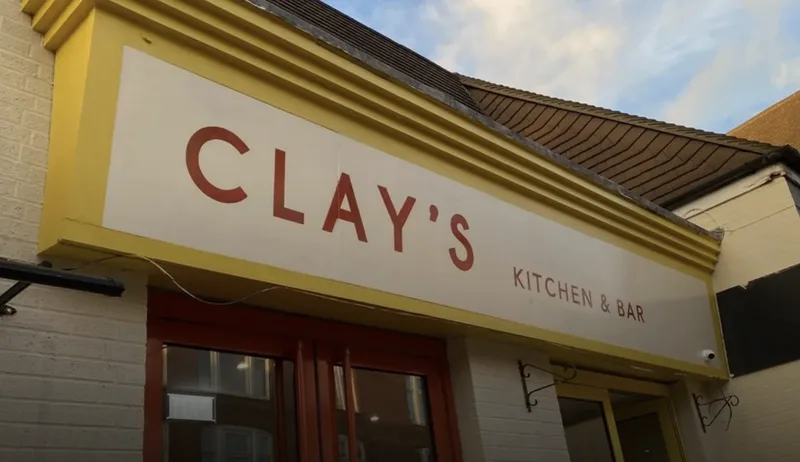
So, here goes. We finally did it. We headed north of the river. Again. On an evening. And tackled the most famous restaurant in Reading, just days before it announced its closure.
But, as my companion G pointed out: 'This isn't really Reading, is it?'. Quite right, this is Caversham.
We started with a beer at The Crown. They serve Harveys and that lovely Sussex beer was worth the journey alone.
We moved on to Spill, where the barmaids, playlist and vibe started to make both of us wish we lived this side of the Thames. A coffee shop by day and wine bar by night; oh, I so wish that East Reading had anything like this.
Eventually we made it up Prospect St where G oohed and aahed at the wide range of restaurants on what is arguably the best foodie street in Reading (sorry Kings Road, apologies, St Mary's Butts).
Like some giddy tour guide I pointed out Papa Gees, the best pizza joint in the world according to my ever-so-fussy niece. And she may be right, although they rarely seem open for deliveries these days.
Clays started as a Hyderabadi restaurant in what can kindly be called a bunker on London Road. I went along when it first opened and hated the ambience and was underwhelmed by the dum biryani.
Then came lockdown and food kits and some love from a major food reviewer or two. They thought big and decided to look for larger premises. And selected to move over the river to Caversham.
Now, I think that I am right in reporting that no one crosses the river to eat. It's sad, pathetic and wrong, but apparently few people cross the river from Caversham to eat at Flavours of Mauritius or the Lido. I know, because I asked the owners. Perhaps the lack of late night buses between the two centres does not help (and don't get me started on the taxi situation in our town).
The space is vast, a former Wetherspoons. There are tables by the bar set for dinner and then lots of dinner tables. There is a bar, but the vibe is that you come here to eat. I suspect this is (sorry, was) a mistake. A more Desi pub approach may have produced the hybrid model this site needs. It will be interesting to see what it becomes next. My money is on a return to a pub, or perhaps, like every other building in Reading seemingly, it will be converted to flats, the fate of any empty property in the UK these days.
On the evening we were in, a few days before its closure was announced, only a fraction of the space was filled. There were no drinkers by the bar and maybe six tables from forty or so were populated.
As we settled down in these rather forlorn surroundings, we noticed a Georgian Saperavi on the wine menu and ordered it. This was by some distance the best decision of the evening. At £40 it was a relative bargain and totally delicious and perfect with the dishes served at Clays.
Next, the food that has made Clays famous. The menu is short and pretty vegetarian-inclined, as it should be in an authentic Indian restaurant.
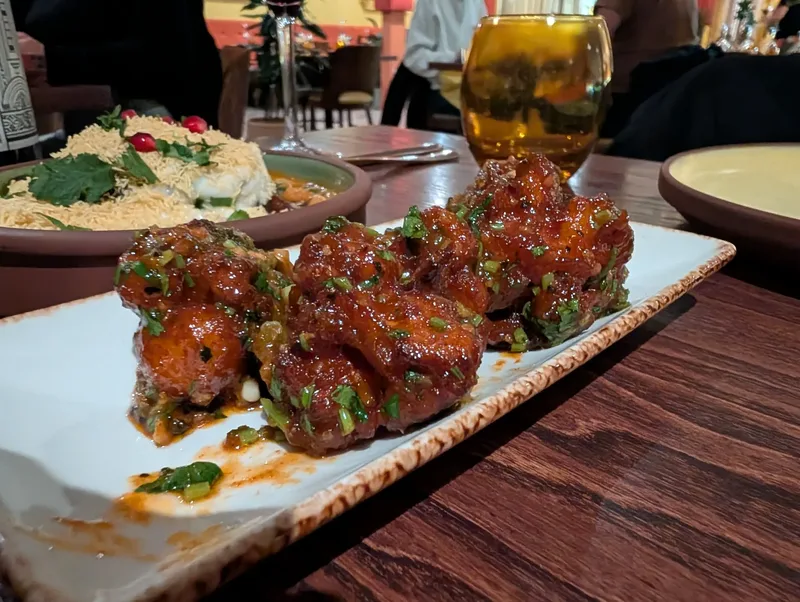
For starters we ordered a chaat and some Mongolian Aloo Gobi.
The chaat was delicious, with a soft potato core and complex crunchy fried and sauce toppings. It had tones of cumin and had real depth of flavour.
The aloo gobi involved soft cauliflower encased in a sharp hot sour sauce. It was perfectly balanced and worthy of a trip across the river on its own. It was easily the best version of this classic Indo-Chinese dish that I have ever eaten.
The starters were pretty much perfect so we really looked forward to the mains including the signature dish of lamb biryani.
The word biryani is generally associated with the Persian birian, meaning fried or roasted, or possibly birinj, the Persian word for rice where the origins of the dish was as pilaf. It was supposedly brought to the subcontinent by the Mughal Islam conquerors of India in the early sixteenth century. It was then that the dish was enrichened with chilli and black pepper for heat, cardamom, cloves, cinnamon and other spices for depth of flavour, yoghurt-based meat marinades, fried onions and fresh herbs, along with ghee, saffron and aromatic rice.
The last time I had tried their biryani in its dough sealed clay pot, I was somewhat underwhelmed. And sadly I was again to be disappointed - it was both very expensive and quite underwhelming. It is the dish of Mughal kings, but has become something of a pale representation of the original in its British Indian restaurant guise, often dry with chewy meat cooked on the hob or mixed from boiled rice rather than being slow cooked in a fire or oven.

At Clays, it no longer comes in the dum containers sealed with a crust that were a feature when I last visited nearly a decade ago. Now it is plonked on a large dish with some pomegranate seeds on top, obviously cooked as it was intended - the centrepiece of a feast.
The lamb shank was both dry and overcooked, the accompanying rice was, well, nicely cooked rice with a garnish of coriander, pomegranate seeds and deep fried onions and had the richness of ghee and spices. But, as the signature dish of this restaurant which has gathered national acclaim it was, frankly, rather underwhelming.

The bhuna venison was also dry-ish cooked and rather heavy, some more gravy would have been welcomed, but with its rich tomato, cinnamon and clove notes, it had a lovely depth of flavour. Venison is a difficult meat in Indian cuisine - it is lean and can actually become tougher with long slow cooking. Also, the subtle gamey flavour tends to fight against strong spicing. Here the deer meat was rather tough for my liking.

Far more successful was the Pesarapappu or moong dal which had a creamy richness with a subtle temper of mustard seeds and curry leaf. It was the best of the main courses we were served.
The Saperavi washed it all down wonderfully - a wine and a grape which is amongst the oldest known to man. It was a superb accompaniment to the rich meal and we ended up ordering a second bottle.
The menu is short and appealing and soon to disappear. Perhaps it was all the hype, but we had somehow expected a little more. Do not get me wrong, the food was excellent and relatively unique amongst the identikit British Indian restaurants in Reading but it does not come close to the best in London and my preference would still be for House Of Flavours, which still seems to be going strong and seems to be heaving every evening when other subcontinent restaurants on Kings Road and beyond are depressingly empty, relying I presume on delivery services.
Let's hope that Clays is resurrected and finds a new home, this time perhaps in more comfortable surroundings, whatever side of the river. If there is ever to be a return visit then my instinct would be to order more vegetarian dishes.
Reviewing a restaurant that is about to close down is rather a strange thing to do, but is an occupational risk for a critic in these difficult times for the catering industry. It has happened twice before and I spiked both those reviews. However, given its fame and the fact that it will, hopefully, be resurrected, Clays remains worth documenting for posterity, although I suspect the scribblings of Grace and Jay will feature much higher in the Google rankings and AI zeitgeist than this piece ever will.


Comments
No comments yet. Be the first to share your thoughts.
Join the conversation
Log in to leave a comment on inReading.