
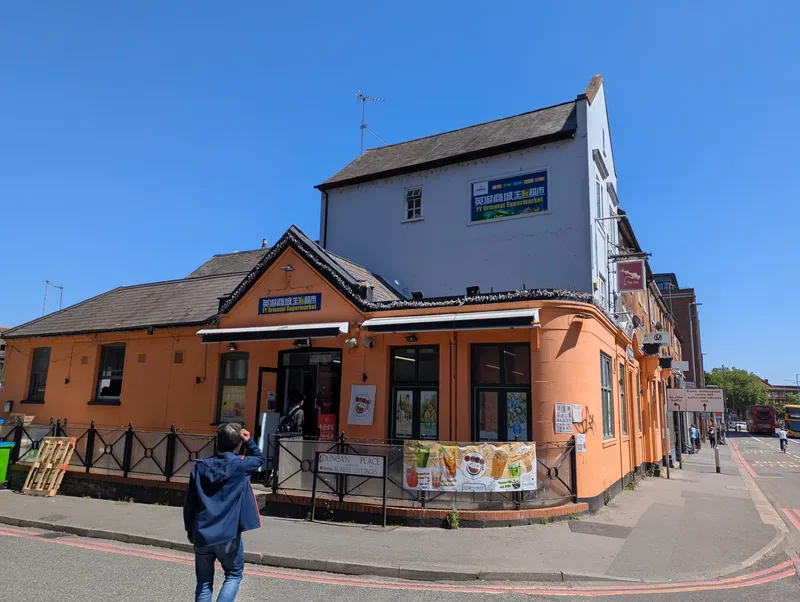
Jay Rayner came to town and raved about Good Old Days, where the chef from the Hong Kong Jockey Club apparently plies his trade these days. (There, I always wanted to start a review with his name). The King's stepson, Tom Parker Bowles, came to town and visited Jenny's inimitable Kung Fu Kitchen (yes, it does pack a punch), but now I will let you into the best not-kept secret in Reading when it comes to Chinese food - YY Kitchen on King's Road.
It is based in the former Warwick Arms, which then became a pan-South-East Asian restaurant run by the team behind The Moderation, then an empty Indian restaurant (as if King's Road needed another Indian), finally, and most recently, a Chinese supermarket, which pleased me no end, largely because I could conveniently buy frozen packs of dim sum to steam and fry and sometimes microwave at home. Despite Itsu, it is one of the areas that UK supermarkets have not properly catered for (honourable mention must go to M&S and especially their prawn toast).
For those of you unfamiliar with this unique cuisine, dim sum is a traditional Chinese meal made up of small, bite-sized dishes typically served with tea. It originated in the southern regions of China, particularly in Cantonese cuisine in the area around Hong Kong, and is commonly enjoyed in the late morning or early afternoon as a brunch or lunch.
The term dim sum (點心) apparently translates as 'touch the heart' in Cantonese. It originally referred to light snacks intended to 'touch the heart' rather than fill the stomach, but over time evolved into a full meal of small dishes.
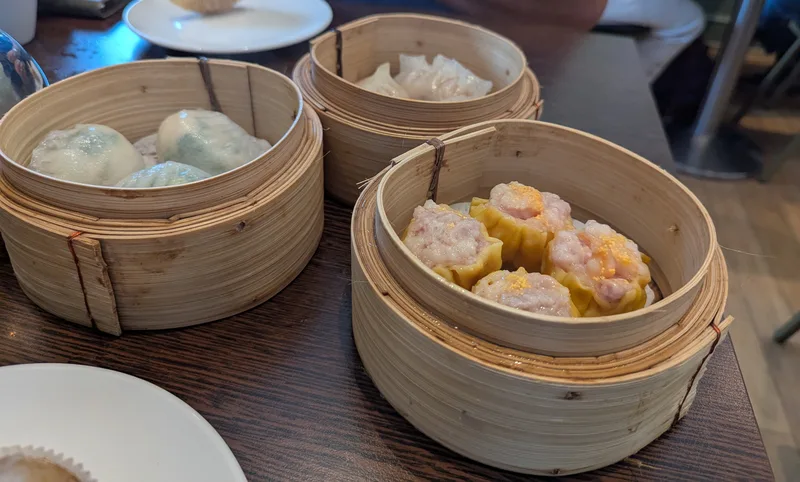
The dishes can include steamed dumplings (like har gow with shrimp or siu mai with pork), steamed buns (bao), often filled with barbecued pork, rice noodle rolls (cheung fun), filled with meat or vegetables and turnip cakes, spring rolls, and sticky rice in lotus leaves and the occasional vegetable dish such as pak choi with sesame oil and hoi sin sauce. Most of these are available at YY, but the beauty of dim sum is that there is always something different in each restaurant. YY has a long menu and always has a couple of specials literally pinned on the wall. As you will gather from my choice of tense of my writing, I am a frequent visitor.
When I first moved from uni to a house share in deepest, darkest Sarff London in my early twenties (a very long time ago), a journey to Chinatown on the 137 bus for 'Chinese breakfast' easily trumped any thought of a Sunday lunch in a pub as a hangover cure.
It is a habit that has persisted. I had a ritual of meeting my CTO and great friend Jay weekly for a dim sum lunch in Chinatown for much of my working career when in the UK. But then he moved to Brighton, got married and we didn't work for the same companies any more. So, there was a gap in my stomach - and my heart - that needed touching.
Since moving to Reading there is plenty to gripe about our home town, but the lack of a decent place to eat dim sum was high on my very biased, very self-indulged list since the somewhat average Peking Inn on Oxford St closed.
But, if you haven't noticed, the UK has become home to many Hong Kong citizens of our former colony of late. China has eaten the enclave of Hong Kong, eroding democracy and the rule of law, and its capable, bright and industrious people have voted with their feet, or rather a flight, to places where they and their children can build decent new lives. Education is important, so Reading and Wokingham have been popular destinations, along with other places with good schools like Altrincham and Solihull.
And, like any diaspora, they need feeding, so imagine my delight when I popped into my local YY store Chinese supermarket one day last May to find that the mezzanine noodle hall (yes, it contained just noodles) had been turned into a little restaurant, YY Restaurant. (No, I have no idea what the initials stand for and probably couldn’t pronounce it anyway).
And when I say little, I mean little - I didn't count but I reckon twenty-five seats at most, including a traditional banqueting table with a lazy susan in the middle. It has subsequently expanded into another area of the supermarket, a measure of its success, as is the endless stream of delivery riders picking up takeaways.
When I arrived just after midday on that Spring Friday, almost all were taken, and all but one seat populated by Oriental people (you know the old saying about being able to depend on a place if people of that heritage eat there? Well that worked for me until my then girlfriend's father offered me sea cucumber in Yeungs in Chinatown some decades ago. Tastes do not always travel).
So I grabbed the last table for two in what is an echoey, sparse space. This place is all about the food. It is not date-night fodder.
G arrived in shorts, it being balmy, and after moaning about mayflies we took the interactive menu and ordered. No, not something you fill in on your smartphone as I had done at my niece's end-of-SATS party at Lucky's in Wokingham the night before, but using a photocopied sheet and a pen.
The temptation is to tick off too much and dim sum is a meal best shared with as many people as you can. Two proved to be a bit awkward since most of the dishes came with three (sizable) portions. So find yourself some friends, neighbours or grab some strangers off King's Road.
I already had jasmine tea on the go, a first for a lunch with G as regular readers will know. Somehow alcohol seems wrong with dim sum and only the florid flavour of this traditional tea will do.
So we too and froed the ordering sheet (small plates on one side, large plates on the other) and ended up with six small plates.
The minced pork and prawn siu mai were about four times the size of their paltry little cousins that you can buy in supermarkets like M&S. Chunky, juicy and steamy. We had asked for chilli and soy dips, which I think the 'morsels' demand to add a bit of roundness.
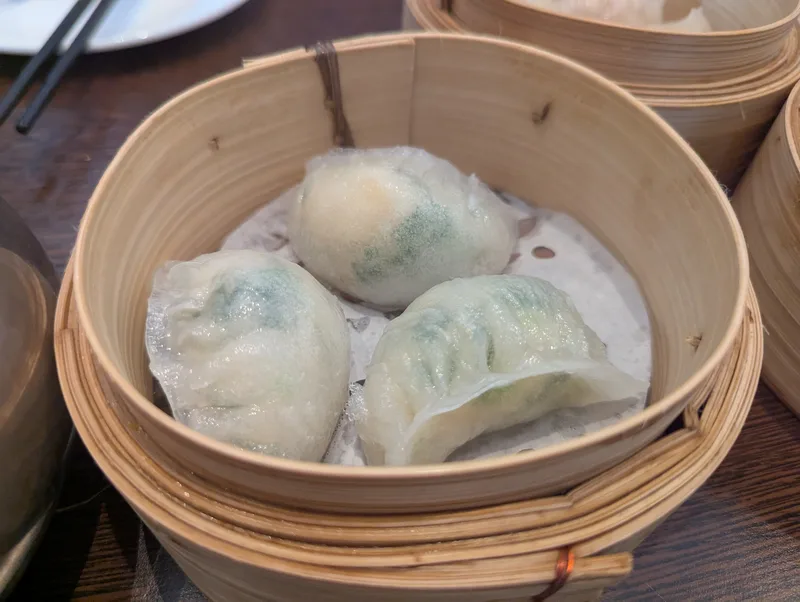
The chive and prawn dumplings were also large and excellent with the addition of some peanut shreds in the filling providing a nutty note. The cooking of the rice pastry case is critical - too sticky and they fall apart, not sticky enough and they are cloying. These were perfect, although on subsequent visits I have found them to be often over-steamed and clinging to each other.
The cuttlefish cake with coriander demanded a bit more coriander and a bit of chilli, in my view and G found it a bit chewy. It came with a sweet vinegar dip.
The deep-fried shredded squid was a bit of a disaster. I presume that the frozen squid had been thawed and fried in a lovely light batter, but the squid itself was rubbery and inedible. If you can't get fresh squid, just drop this dish. Not recommended.
The pork puff pastry was liked by G but I was ambiguous – it was a bit too sweet for my liking and the filling could have been more generous.
Finally, the beef citrus leaf with ginger and spring onion was my favourite, again enhanced by some diced peanuts.
By now we were getting full, but I have one measure of any Chinese restaurant in the UK and it is one dish that you must get right, so as is traditional at the end of any Chinese we ordered noodles, for long life. A lovely concept. So we did - my key metric at any Chinese restaurant - Singapore Fried Vermicelli.
This dish of curried thin rice noodles stir-fried with vegetables, shrimp, pork, chicken or even spam and egg has many theories about its origin. One states that it was conceived in the Philippines where locals used GI’s spam rations during R&R breaks from the Korean War to make up an interesting hybrid dish (interestingly enough, spaghetti carbonara has a similar origin story from GIs in Italy during WW2). Equally, it may have evolved from a hybrid of Indian and Chinese cuisine in Singapore, but it is not a dish that appears amongst traditional hawker dishes like laksa, hokkien mee, and char kway teow and has fast become a British staple.
But most probably it’s apparently a Cantonese creation, most likely born in the bustling kitchens of Hong Kong or among the Chinese diaspora in Western countries such as the UK, Australia, and the United States, representing a fusion of traditional Chinese stir-frying techniques with Southeast Asian flavour profiles, particularly the use of yellow curry powder, which is uncommon in authentic Chinese cuisine.
The name “Singapore noodles” appears to have been a marketing invention - an attempt to evoke an exotic, pan-Asian appeal for Western diners. Much like the US developed chop suey or General Tso’s chicken.
In reality, Singapore fried noodles is less a dish with a birthplace and more a symbol of migration, adaptation, and the imagination of the global palate. It’s an invented tradition - but one that has become a beloved fixture in Chinese takeaways and fusion menus around the world.
So, it was appropriate then that this was the highlight of the meal.
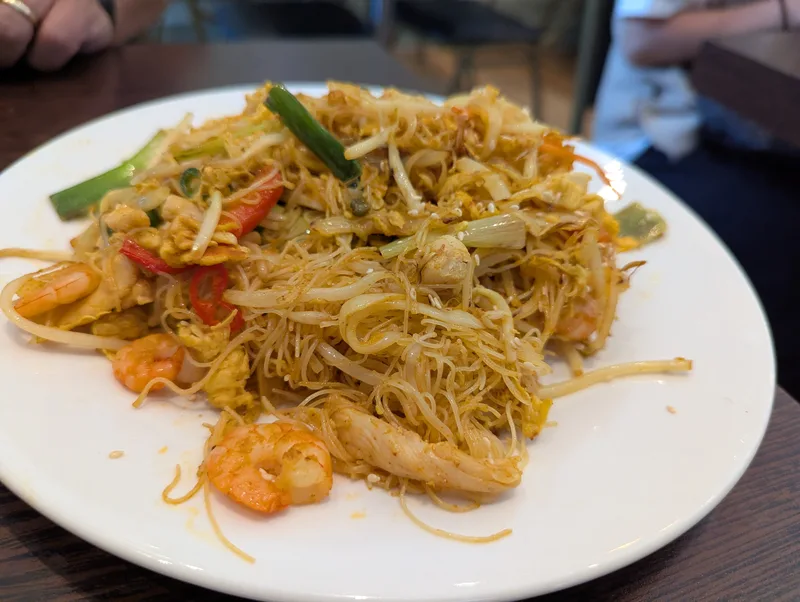
We obviously weren't hungry, but devoured the heaped plate of the lovely prawn, chicken, spring onion, pepper, carrot and bean sprout noodle dish doused subtly in a curry flavour and with very few chillies (despite the warning from our waitress). It was mild, but also not cloying of chilli or curry, or doused in oil. This kitchen has someone who knows his or her wok to perfection.
Now, I do not say this lightly, but both G and I agreed that this was the best Singapore fried noodle ever and it has always impressed on return visits.
By this point we had succumbed to a couple of Tsingdao beers, which our lovely waitress helped us pronounce properly (after all these years pronouncing it wrongly I am still a gweilo...).
Overall, YY Kitchen has become a brilliant and welcome addition to Reading's culinary scene. It is exactly the opposite of those pretentious Insta-grabbing chains that are more visual impact than a great dining experience. Its expansion since my first visit is testament to its success.
It's perhaps surprising that this remains the only true dim sum restaurant in Reading despite our massive Cantonese influx, but the food is complex and expensive to create and the prices do reflect this. Despite the bargain-basement surroundings, the prices are not exactly bargains with dim sum dishes in the £6-8 range and main courses in the mid-teens, but shared amongst a group, you can easily enjoy a good lunch or dinner at what might still be one of Reading's best-kept secrets. Now where is Grace Dent when you need her?


Comments
No comments yet. Be the first to share your thoughts.
Join the conversation
Log in to leave a comment on inReading.