
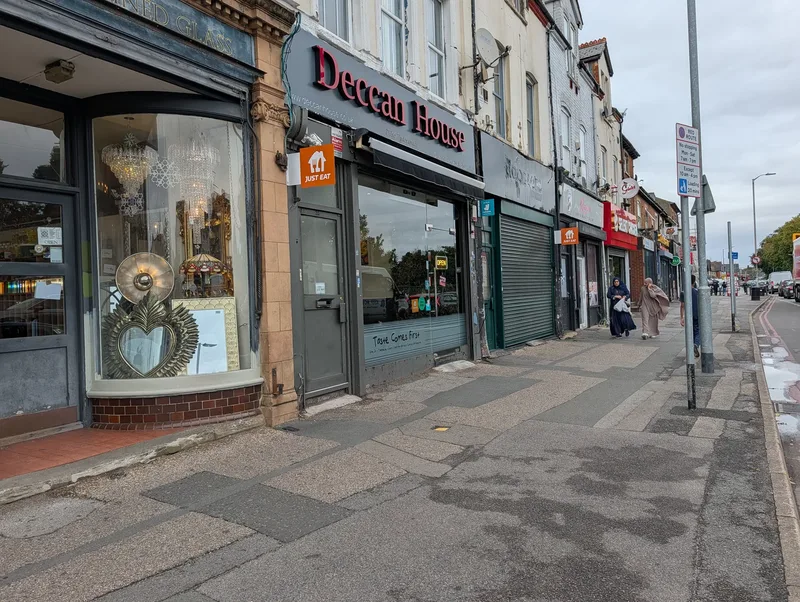
Ah, Cemetery Junction ! Hardly the throbbing culinary centre of Reading.
I had to pop to the pharmacists and to pick up my fixed laptop from the very capable people at Uni Computers (highly recommended for all your broken machines, by the way, if a bit chaotic).
And it was around lunchtime. So was this an opportunity for a quick lunch at Mr Cod or one of the many chicken or Indian fast food joints, a burger or ice cream at the Granby (formerly a pub owned by former England manager Terry 'El Tel' Venables) or a breakfast and cuppa from local stalwarts Yolk or Little Apron ?
The choices are surprisingly bleak with both O! Portuges and its succeeding Greek bakery and now Tutu's closing down, both far up the road. Cemetery Junction really does not have a decent sit down restaurant. The Hope & Bear will have to wait for another day.
So I plumped on Deccan Kitchen, which is just a cut above the aforementioned formica takeaway with decent decor and a wide ranging pan-Indian menu.
Hyderabadi Dum takes pride of place on the menu, but there are dishes from all over the other end of India. To be fair, the food here really should be tried out by a crowd sharing the many dishes on offer from Nepal to Tamil Nadu, but I was on my lonesome and not especially hungry, so I went ultra safe and plumped for my usual lunchtime order from Madras Flavours or Chillis of a masala dhosa and mango lassi. At least I could compare like for like.
Except there was no mango lassi (and no kulfi). Indeed the menu had been heavily redacted, which is fair enough, but something more flexible like a blackboard could serve them well (those English pubs do have some good ideas), or how about a pandemic era app where you could do all your ordering? But let's get on to what they did have available.
A dhosa or dosa is a thin, crisp pancake made from fermented rice and urad dal (black gram) batter with a filling of masala - in this case a spiced mixture of boiled potatoes, onions, mustard seeds, turmeric, and green chillies.
It is normally served with a range of accompaniments, including sambar, a hot, sour, and spicy vegetable stew made with lentils, tamarind, and a special spice blend including somewhat unfamiliar powders such as asifeta.
And then there are the chutneys: coconut chutney, the main South Indian condiment with a cooling (if often fiery) flavour profile made from freshly grated coconut blended with roasted gram (chana dal), ginger, and green chillies. This white chutney is usually tempered with mustard seeds and curry leaves.
Red Chutney, which is a tangy, sharp, and fiery condiment. It comes usually as in tomato-onion flavours (sauteed tomatoes, onions, garlic, and tamarind) or a Kaara chutney (heavily featuring dried red Kashmiri chillies blended with lentils).
Finally, there is green chutney - a bright, aromatic, and herbaceous dip. It is made by blending fresh coriander and mint leaves, green chillies, cumin, and a splash of lemon juice or tamarind paste for zest with a coconut base.
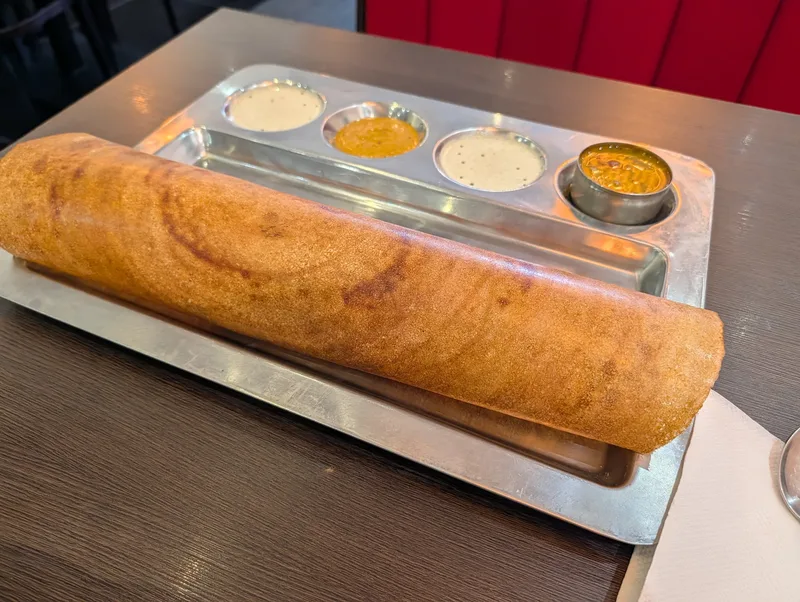
The sambar at Deccan was passable but there were only two chutneys - coconut and tomato. All were passable. The potato filling was paltry and the dhosa fine and crispy. Wow, was that the shortest real review ever published on inReading ? Mea culpa.
To try and balance this review on a Saturday a couple of weeks later I thought that I would order a take away from Deccan, but after I added a rice and chicken with a naan, it came to £35!!! So I cooked my own curry in half an hour for a quarter of the cost and I will never know what I was missing.
Reading has far too many curry houses and I hope a half of them close down and a half of those become gastropubs. Chance would be a fine thing... In the meantime I cannot honestly claim to give you a fair appraisal of Deccan House other than next time I will take the half mile walk to Madras Flavours.
Comments
No comments yet. Be the first to share your thoughts.
Join the conversation
Log in to leave a comment on inReading.