
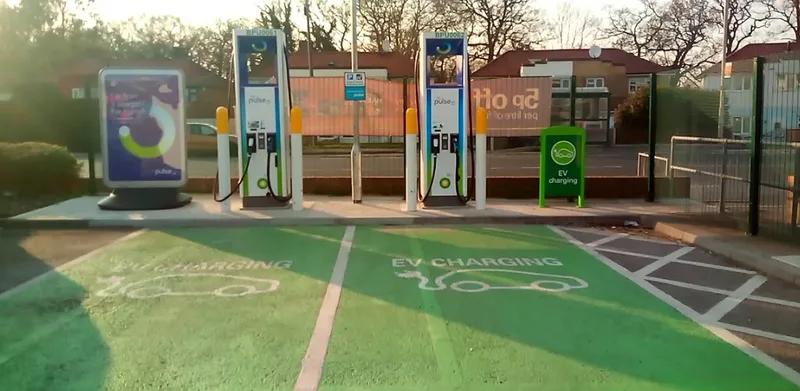
The move to electric vehicles (EVs) seems to have hit a road bump, with worries about the charging infrastructure (and ludicrous charges for fast charging), a precipitous decline in the value of cars, even notwithstanding that many people will not want to be associated with a tarnished brand like Tesla and lack of any support or incentives for EVs.
So, if you live in Reading, does owning an EV make any sense ? Reading Borough Council seem to think not. Despite the significant polution issues in the town centre, they do not see EVs as a long term transport solution, the recently published Transport Strategy 2036 says:
"There is a challenge of providing the right balance of public electric car charging infrastructure to support EV take up, whilst not necessitating expensive electricity grid reinforcement and battery storage that may not be required in the long run."
RBC seems to be in the 'robotaxi' camp, although considering what a mess the current taxi provision is within the town, it is difficult to see town as being one of the first to introduce Elon Musk's vision of thousands of sleek sports cars with no space for children or luggage complimenting a bus service that has struggled to move to renewables.
"Whilst technologies are developing that are reducing the level of NOX and particulate matter vehicles emit from exhausts, and the UK is shifting towards electric vehicles, around 85% of fine particulate pollution from vehicles does not come from exhausts."
This is an old and disengenious study that does not take into account exhaust fumes at all (the particulates referred to are tyre waste by and large), other more recent studies consider pollutants to come around half from exhaust emmissions and half from non-exhaust emmissions.
So, in central Reading the local government is dead against low emission vehicles with few plans to provide a decent network of charging points thus making the adoption of EVs practically impossible for many residents.
Electrifying The Burbs
However, if you live in a nearby Berkshire village or even in a house in the town, then the answer may be very different and RBC's strange policies do not come into play.
According to AI engine Claude (and we corrected and checked the calculations) the logic goes as follows: to commute into London from your house in Reading with home EV charging using a couple of typical exec SUVs from the same company, one electric, the other diesel, the annual costs work out as:
Jaguar I-PACE EV400 (overnight charging): £3,970.04
Range Rover Discovery Dynamic SE: £12,186.44
Rail Commute: £6,776
Now, this presumes that you have free parking at your destination (ontract parking will cost £500-£1000 pcm). However, this does include the £520 road tax that the EV driver will have to pay from April 2025, reducing the margin.
Obviously, the advantage narrows somewhat if you're only commuting three days a week, but it does still make the EV more attractive compared to rail if you have parking. Otherwise, you now know how our rail companies are able to justify the astronomical cost of commuting in the UK.
But most people do not cover such a range daily, perhaps driving down to Winnersh Triangle or TVP for work, and do not require such expensive cars for the school run or to pop to the supermarket (two behaviours our local council is trying to end according to its recently published Transport Plan, probably justifiably so).
If you travel, on average, 10 miles a day, ChatGPT (again calculation checked and verified line by line) states that the overall cost for running a small EV would be £85 a month. It calculates that a similar small petrol car would cost around £125 a month to run. Again, this excludes the cost of the car itself.
Other considerations are the purchase or lease cost, which have been exorbitant for EVs up until recently, but now you can buy the iPace mentioned above for £20-25k, the second Discovery will probably cost double for the same spec, so you are now likely to be quids in if you go green using the second hand market. Smaller lower range EVs are now available for five to six thousand pounds.
But, calculations aside, the real mitigating factor is in all of this is your ability to charge at home. The UK has become a nation of haves and havenots which RBC seemingly does not want to 'level up'.
The Sums
But, whilst we're at it, let's take a deep dive into the sums.
A cheap overnight rate from, say, Octopus Energy, come in at around 7p a Kq. For fast chargers such as the Insta Volt facility at the Select Car Leasing Stadium, the price is 85p per Kw.
For those of you who, like your correspondent, have always been confused by car economy being quoted in MPG whilst fuel is sold by the litre, let me explain.
A typical EV will travel 2.5 - 4 miles per Kw. So, the cost for home charging is around 2p a mile, with public charging costing around ten times this. At around £5.50 per gallon a car doing 30mpg will cost around 18p per mile. A more efficient diesel car may manage to bring this down to 12p per mile.
So, if you charge at home overnight then your fuel costs will be at least a sixth lower in an EV. If you travel 10,000 miles a year that's a saving of £1000 a year.
Efficiency
One factor worth highlighting is that EVs are great if you do most of your motoring in town or on hilly country roads. Due to energy regeneration the cars can actually generate a lot of charge when braking or coating downhill. However, at high speeds on a motorway none of this happens and speeds over 60mph reduce the KW/mile efficiency tremendously. So, if you live in the Chilterns and travel locally or avoid motorways for most of your driving, then you will be quids in.
Going Green
But let's look at the green factor. EVs, often being heavier than ICE cars, can generate more NEEs, so surely any contribution to its polluted, clogged up traffic arteries would be welcome, but this ignores the impact they have already made. So, the adoption of electric vehicles still has the potential to significantly improve public health by reducing air pollution, particularly from nitrogen dioxide (NO2) and particulate matter (PM2.5), which are major contributors to respiratory and cardiovascular diseases.
According to a recent study published in Nature magazine, transitioning to EVs could help reduce NO2 emissions by up to 30% in some urban areas, leading to fewer hospital admissions related to respiratory illnesses such as asthma and chronic obstructive pulmonary disease (COPD). The UK government estimates that air pollution currently contributes to 40,000 premature deaths annually.
That's also more resources for the NHS to spend on other priorities.
Still on green credentials, many people point to the higher environmental production cost of EVs, using more rare earth metals. However, the major factor here is the lifespan of a vehicle, and, in the real world most EVs are proving to have longer lifespans than similar ICE vehicles, mitigating this argument. Moreover, much of the raw materials are reasonably easy to recycle.
But perhaps most important of all is that around 40% of electricity in the UK is currently produced from renewables such as wind and solar so the benefits of EVs are immediate, considerable and growing.
But, frankly, if going green is a priority for you, then RBC is right. Buy a bike or use the bus.
Practicalities
So, there are consideration before you adopt an EV - cost, going green and the ability to charge..
Reading is a town where 60% of people rent and where ten flats are currently being built for every house.
Most of these flats are constructed with little or no parking provision. For example, a 250 bed new development on the river at Vestern Avenue is slated to have 136 bike bays but room for only 12 cars.
If you live in an area like Newtown or off Caversham Road, you cannot depend on a parking spaces, and until every lamp post has a charging point installed, the practicalities of owning an EV are probably too complex.
And even if you can find a place to park in your house and have to run a charging cable over the pavement, you are liable for anyone tripping over the wire.
Public Charging
Public charging is not only expensive, but can be frustrating.

Charging in Central Reading can be frustrating with no ultra fast chargers. Source: PlugShare
Central Reading has seen an increase in charging points, with a mix of fast and rapid chargers available. However, it's important to note that while the infrastructure is improving, there are still limitations. Public chargers can be found at locations such as the Oracle shopping centre, Reading train station, and other public car parks, but availability can be an issue, especially during peak times. There are some rapid chargers (50kW+) in the area, but these are often busy and may require you to wait. It's also crucial to be mindful of maintenance issues—charging stations sometimes go offline, so you may need to check availability before setting out using an app like Zap-Map or PlugShare.
 There are also some real EV charging not spots in West reading and Earley. Source: PlugShare
So, if you have a driveway or garage and either commute of just do low local milage, then an EV is a no brainer. If you do regular long distance milage, especially journeys over two hundred miles then you're probably better off still considering an ICE car. If going green is important to you, then ride the buses, cycle or walk.
https://democracy.reading.gov.uk/documents/s27659/Appendix%20A%20-%20Reading%20EVCI%20Strategy%20-%20June%202023.pdf




Comments
No comments yet. Be the first to share your thoughts.
Join the conversation
Log in to leave a comment on inReading.