
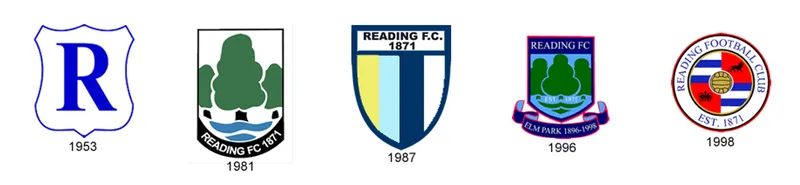
Reading Football Club, established in 1871, is one of the oldest football clubs in England. Over its history, the club has experienced successes, challenges and some landmark achievements, but, thanks to its most recent owner, it seems to be in a right Royals mess, with few options to sort the situation out. This month we take a deep dive into the club, its history, achievements and what lies ahead.
Reading FC was founded on Christmas Day, 1871, by local cricketers seeking a winter sport. The first game was a 0-0 draw with Reading School on 21st February 1872. The club initially played its matches at Reading Recreation Ground (now King’s Meadow).
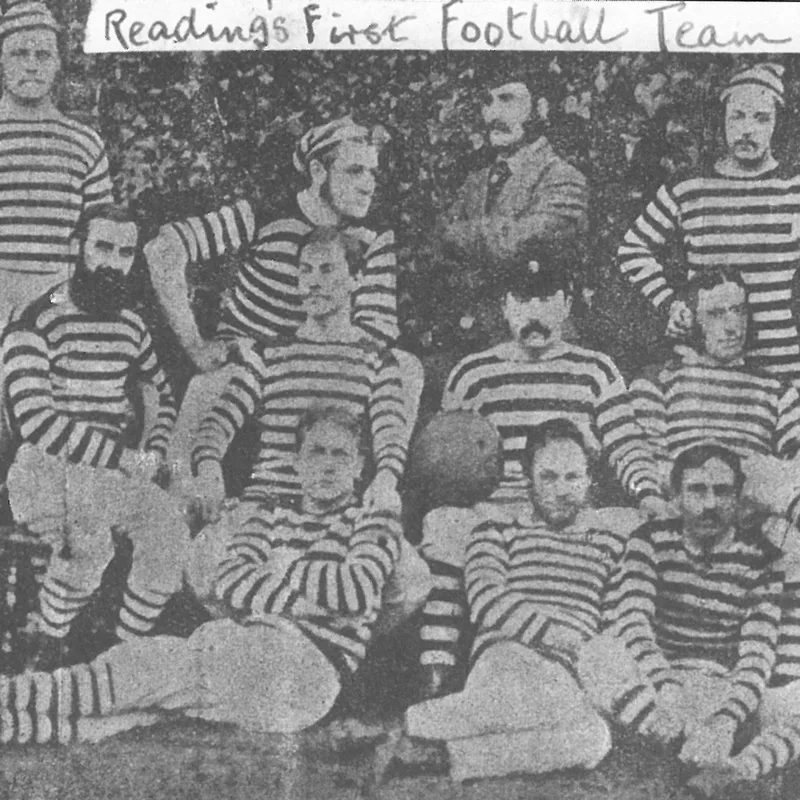
By 1878 the club had moved to the Reading Cricket Ground and boasted both Welsh and English internationals in its side. The first trophy it won was the Berks & Bucks Senior Cup in 1879.
The club joined the Southern League as a founder member in 1894 and became professional in 1895.
Notable early players included Herbert Smith, an amateur international, and Archie Goodall, who would later play for Derby County and Ireland. Reading quickly became a competitive side, gaining a reputation for its organized play and attracting attention from larger clubs.
The club transitioned through various grounds, including Reading Recreation Ground and Coley Park, before settling at Elm Park in 1896. Elm Park would remain the home of Reading FC for over 100 years.
It should be noted that at this time a game featuring the British Ladies Football Club in Elm Park drew one of the biggest crowds recorded, and the women’s game would see a further resurgence during the war as men’s football was suspended, before shamefully being banned by the Football Association in 1921 on ‘health grounds’.
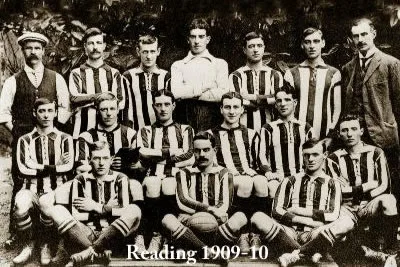
In the Southern League, Reading established itself as one of the stronger teams. The club reached the Southern Charity Cup final in 1901 and won the division two title in 1911, marking its first significant silverware. The competition level in the Southern League and good runs in the FC Cup with wins against teams such as Bolton and Aston Villa prepared Reading well for a future step into the Football League.
Following a hiatus during the Great War, in 1920, the Football League expanded to include the Third Division. Reading was among the clubs invited to join. The club's first season in the Football League saw it finish towards the bottom of the table.
The 1920's and 1930's saw Reading FC achieve some memorable moments. In 1926–27, the club reached the FA Cup semi-final for the first time. Led by manager Billy Moore, Reading defeated teams including Manchester United and Swansea Town before falling to Cardiff City at Molineux. That semi-final remains one of the highlights of Reading’s early years.
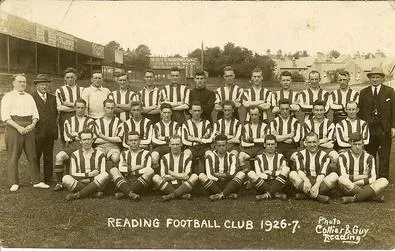
The team was briefly promoted to Division Two but struggled against bigger sides and was, again, relegated.
Notable players of this era included Percy Freeman, a prolific striker, and Hughie Russell, whose leadership on the pitch was instrumental in the FA Cup run. Despite these successes, Reading struggled to achieve promotion from the Third Division South.
During World War II, the club, like many others, saw its activities disrupted. Elm Park was used for wartime purposes, and the team participated in regional wartime competitions.
After the war, Reading resumed league football in 1946 and became a mid-table side in the Third Division South. The 1951–52 season marked a near-miss for promotion, with Reading finishing second behind Plymouth Argyle.
The 1960s were characterized by a mix of highs and lows. Elm Park hosted some of its largest crowds, including a record attendance of 33,042 in 1949 for an FA Cup match against Brentford. Players like Ron Tindall and Jimmy Wheeler became fan favourites, with Wheeler later managing the club in the 1960s.
However, relegation to the Fourth Division in 1971 marked a low point. Reading found itself battling to regain its position in the Football League’s upper tiers.
The 1970s saw Reading's fortunes begin to improve. Under manager Charlie Hurley, the team gained promotion to the Third Division in 1976. The decade also saw the emergence of cult hero Robin Friday. A mercurial talent, Friday scored some of the most memorable goals in Reading history, including a famous volley against Tranmere Rovers in 1976.
The early eighties saw a dark period in the history of the club, with crowd trouble, poor performances and dwindling attendances. The infamous media mogul and swindler Robert Maxwell tried to merge Reading with his own Oxford FC to form a Thames Valley club, but ultimately failed.
Reading achieved stability in the late 1980s, with promotion to the Second Division in 1986 under Ian Branfoot. The team boasted players like Trevor Senior, who became the club’s all-time leading scorer. 1988, Reading won the Simod Cup, defeating Luton Town 4–1 in the final at Wembley, but were again relegated during the same season.
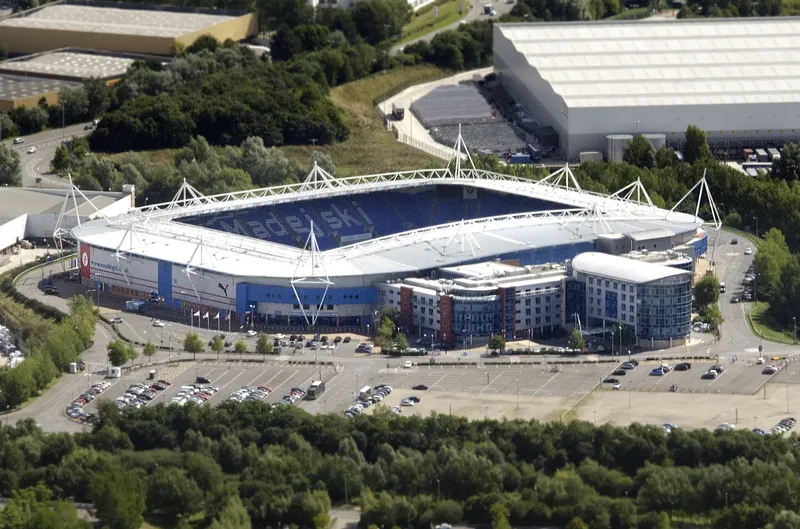
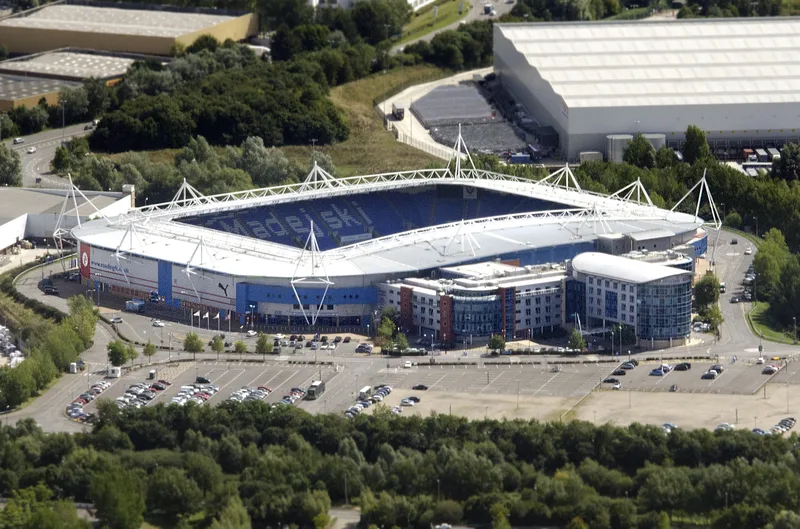
The 1990s were transformative for Reading FC. John Madejski, a local businessman, became chairman in 1990. His investment and vision set the club on a path to modernization. A pivotal moment came in 1998 when Reading moved from Elm Park to the new Madejski Stadium, a state-of-the-art 24,200-capacity venue.
On the pitch, the team came close to achieving Premier League football in the 1994–95 season. Managed by Mark McGhee, Reading finished second in the First Division but missed out on automatic promotion due to league restructuring. The heartbreak was compounded by a playoff final loss to Bolton Wanderers, going from two up at half time to losing in extra time.
Alan Pardew took over as manager in 1999, leading Reading to promotion from the Second Division in 2002. Pardew laid the foundation for future success, building a team that included standout players such as Nicky Shorey, Phil Parkinson (of Welcome to Wrexham fame), and Jamie Cureton.
Steve Coppell succeeded Pardew in 2003 and took the club to unprecedented heights. In the 2005–06 season, Reading won the Championship with a record-breaking 106 points, earning promotion to the Premier League for the first time in its history. The squad, featuring Kevin Doyle, Dave Kitson, and Ivar Ingimarsson, became legends among Reading fans.
Reading’s journey from its formation in 1871 to its Premier League debut in 2006 reflects over a century of perseverance, community support, and ambition. Though the road was often challenging, the Royals’ story is one of steady progress and achievement, firmly rooting the club in the history of English football. But after the rise, came the fall…
Under the management of Steve Coppell, Reading FC achieved promotion to the Premier League for the first time in the 2005–06 season, amassing a record 106 points in the Championship. Their inaugural Premier League campaign in 2006–07 was impressive, with the club finishing 8th. However, the following season saw a decline in form, leading to relegation in 2008.
The club remained in the Championship until the 2011–12 season when, under Brian McDermott, they secured the league title and returned to the Premier League. Unfortunately, the 2012–13 season ended in relegation, and McDermott was dismissed in March 2013.
In 2014, a Thai consortium led by Khunying Sasima Srivikorn acquired a 51% stake in Reading FC. This period saw mixed results on the field and financial instability off it. In May 2017, Chinese siblings Dai Yongge and Dai Xiu Li purchased a majority share in the club, aiming to stabilize finances and achieve Premier League promotion.
Despite significant investments, including the development of the Bearwood Park training facility, the club faced financial difficulties. In 2021, Reading breached the English Football League's (EFL) Profitability and Sustainability rules, resulting in a six-point deduction. Further breaches led to additional points deductions, totalling 18 points under Dai Yongge's ownership. These penalties contributed to the club's relegation to League One in 2023.
Fan unrest grew due to financial mismanagement and poor performances. Protests intensified, with supporters calling for Dai Yongge to sell the club. In January 2024, a match against Port Vale was abandoned after fans invaded the pitch in protest.
In March 2024, the club entered exclusive negotiations with a potential buyer, but the deal collapsed. Subsequent takeover attempts, including one by American lawyer Rob Couhig, also failed thanks to Chinese banks having a lien over the club ground and other assets.
As of October 2024, the club agreed to a period of exclusivity with another potential purchaser, with both parties working to finalize terms.
Most sadly of all, the financial difficulties saw the demise of the highly successful women’s side, who had been competing at the highest levels.
Reading FC Women began in 1988 as Reading Royals LFC, an independent club promoting women’s football at a time when the sport was still developing in England. In 2006, they merged with Reading FC, rebranding and gaining access to better resources and infrastructure. The team steadily climbed the ranks, reaching the FA Women’s Super League 2 (WSL 2) in 2014. Their crowning achievement came in 2015 when they won the WSL 2 title, earning promotion to the top-tier FA Women’s Super League (WSL).
In the WSL, Reading FC Women established themselves as a competitive side, finishing as high as fourth in the 2017–18 season and reaching the FA Women’s Cup semi-finals in 2019. The team became known for nurturing talent and fielding high-profile players like Fara Williams and Jade Moore, cementing their place as a respected force in women’s football. However, as the women’s game became increasingly professionalized, Reading struggled to financially compete with larger clubs, despite strong on-field performances.
These financial challenges culminated in their relegation from the WSL in 2023 and, more significantly, the team’s withdrawal from the Women’s Championship in 2024 due to broader financial issues at the club. As of the 2024–25 season, Reading FC Women are competing in the Southern Region Women's Football League Premier Division, which is the fifth tier of English women's football and have moved from Reading, using Slough Town FC’s ground.
It is not surprising that, on the back of this, discontent among supporters has been palpable, culminating in the formation of the 'Sell Before We Dai' protest group. This coalition, comprising various fan organizations, has been vocal in its demand for Dai Yongge to relinquish ownership, citing financial mismanagement and a lack of transparency. Protests have been a common sight at the Select Car Leasing Stadium, with fans expressing their frustration through organized marches and demonstrations.
Under Dai's stewardship, Reading FC has faced multiple points deductions due to breaches of the English Football League's (EFL) financial regulations. These sanctions have been imposed for failures to pay players on time and other financial irregularities. Cumulatively, the club has been docked 18 points, significantly impacting its league standings and contributing to relegation to League One.
In a bid to alleviate financial pressures, the club explored the sale of its state-of-the-art Bearwood Park training facility. Negotiations were held with Wycombe Wanderers, but the deal faced backlash from supporters who viewed the sale as a short-term fix that could jeopardize the club's long-term assets. The proposed sale was eventually abandoned, leaving the club's financial woes unresolved.
Compounding the club's financial difficulties is a lien held over the Select Car Leasing Stadium by Chinese investors. This legal claim complicates any potential sale of the club or its assets, as it grants the lienholders a right to the stadium in the event of default. The existence of this lien has been a significant barrier to attracting new investors and has further strained the club's financial flexibility.
The 'Never Say Dai' era has been a challenging chapter in Reading FC's history. The club's supporters remain hopeful for a resolution that will restore financial stability and preserve the legacy of a club that has been a cornerstone of the community for over a century. However, it is clear that administration is the only remaining path for the club as it runs out of money, options and suitors. The lien over the stadium is a poison pill and it is obvious that Yongge does not have the means to pay off this debt. The resulting £50m is probably more than the club and the land is worth.
Several clubs, including Portsmouth, Bolton Wanderers, and Wigan Athletic, have experienced administration but eventually recovered through fan support, strategic management, and new ownership.
If Reading FC were to enter administration, it would have significant consequences, both immediate and long-term, for the club. Administration is a legal process designed to protect a financially distressed company from creditors while seeking a path to survival, but it comes with severe repercussions in football.
The English Football League (EFL) imposes an automatic 12-point deduction on any club that enters administration. If the administration occurs during a season, the points are deducted immediately, which could severely impact Reading's league position, even as they are doing well in League One. And there could be other penalties to follow.
Links:

Comments
No comments yet. Be the first to share your thoughts.
Join the conversation
Log in to leave a comment on inReading.