
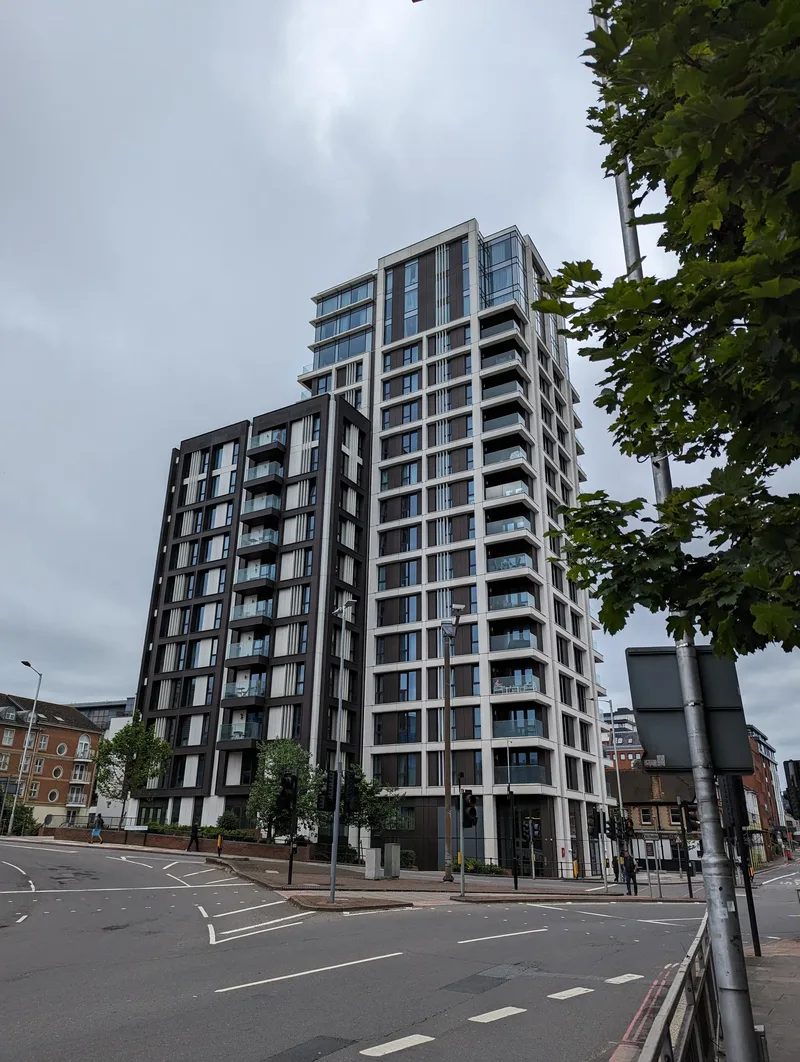
We take a look at how 2025 is set to become the year of the property developers.
Well, 2024 wasn’t that great for Reading, was it ?
Our football club made good progress on the pitch but none off and then lost a great manager. They enter 2025 with the ‘poison pill’ of the lien over the stadium apparently removed, but there seem to be few interested parties left by now in purchasing the club and as we enter the mid-season transfer window things look bad financially for the club. Perhaps Kate Winslet and Natalie Dormer can come to the rescue ?
More bus lanes and roadworks meant more traffic, and more paths were cut off affecting local businesses, culminating in the permanent closure of the footbridge by the Queen’s Road parking. The bus lane from the A329 to London Road seems particularly badly implemented with large gaps.
More pubs closed and more southern Asian restaurants opened (which isn't a bad thing per se but there seem to be a lot of 'similar' restaurants and nothing feels very new).
The number of indie shops in the town continues to dwindle (unless you count vapes, barbers or nail parlours) with But Is It Art the latest to give up on a physical presence in the town centre.
For a town on two rivers and just two main bridges, transport remains a perennial issue. The railway line to London, despite being amongst the most expensive ways to travel on public transport anywhere in the world, seemed to be afflicted by serious delays every third day thanks to ‘incidents on the track’, signalling problems, strikes and a plethora of other issues.
There were some good things – our bus service continues to expand and improve. Siren Brewery opened, The Purple Turtle looks set to expand and there are a load of bowling alleys coming to town (see our report below).
Things look a bit more promising at the Gaol with plans being postulated to turn it into a hotel with an art gallery…and robots.
But, perhaps more than anything, it is the property market that was the ‘theme of the year’.
Reading has done well in meeting the building targets set by central government, and Wokingham has also seen similar mass development. But a new government means even greater targets.
Across Berkshire councils have been told to build more than 6,800 new homes every year for the next five years by the government – a figure almost 50% higher than the target set by the previous Tory government. Wokingham has had its targets increased by more than 50% to 1336 new homes, Reading, already designated an area that could take more property development has seen its target increase slightly to 1127 from 878.
As the map below shows, there is already a pipeline to achieve this in central Reading.
However, this comes against a backdrop of rents rising rents, which went up by more than 10% last year alone in Reading.

And even though property prices have fallen slightly, the average cost of a home in the borough is £332k. Which begs the question - are we building the right types of homes ?
The need for affordable and social housing is significant. The Berkshire (including South Bucks) Strategic Housing Market Assessment (SHMA) conducted in 2016 identified a requirement for 406 affordable homes annually from 2013 to 2036, representing almost 60% of Reading's total housing need during that period.
Despite this substantial need, the actual delivery of affordable housing has fallen short. Between 2013 and 2020, a total of 648 new affordable homes were completed, averaging approximately 93 per year. This equates to about 23% of the identified annual need.
More recent data indicates some improvement. In the 2021-2022 period, 178 affordable homes were delivered, and in 2022-2023, 135 were completed. While these figures show progress, they still meet only about one-third of the annual requirement, with 135 units representing approximately 33% of the 406 homes needed each year.
The problem is that it is easy for housing developers to argue that such targets are not commercial and wriggle their way to much lower figures.
In terms of policy, Reading Borough Council's Local Plan, adopted in November 2019, sets targets for affordable housing contributions from new developments:
On sites of 10 or more dwellings: 30% of the total dwellings should be affordable, on sites of 5 to 9 dwellings, a financial contribution equivalent to 20% of the housing to be provided as affordable housing elsewhere in the borough. On sites of 1 to 4 dwellings a financial contribution equivalent to 10% of the housing to be provided as affordable housing elsewhere in the borough.
Additionally, the Affordable Housing Supplementary Planning Document (SPD), adopted in March 2021, specifies that for on-site affordable housing provision, 62% should be rented at 'Reading affordable rent' levels (capped at 70% of market rents), and 38% should be intermediate or shared ownership. The actual figure during this time has been around 15% according to our calculations based don available public information.
Another issue is the contribution made by developers to infrastructure.
Housing developers in Reading, Berkshire, contribute to local infrastructure primarily through two mechanisms: the Community Infrastructure Levy (CIL) and Section 106 agreements.
CIL is a charge levied on new developments to help fund infrastructure projects that support growth. In the 2020-2021 financial year, Reading Borough Council collected approximately £5.857 million in CIL contributions. Of this, 80% (£4.688 million) was allocated for strategic infrastructure projects, 15% (£875,949) was designated for neighborhood projects, and up to 5% (£292,851) was reserved for administrative costs.
Section 106 agreements are legal agreements between developers and the local authority, securing contributions toward specific infrastructure needs arising from a development. In the same 2020-2021 period, Reading Borough Council collected approximately £1.288 million through Section 106 agreements. These funds were allocated to various projects, including transportation improvements, education facilities, and affordable housing.
Examples of developer contributions include sporting facilities, the new Green Park Station and various local initiatives, such as pedestrian crossings, cycle path repairs, and enhancements to play areas.
These contributions play a crucial role in enhancing local infrastructure, but if you consider that the value of properties at the recently completed Huntley Wharf development was approximately £500 million, this seems a drop in the ocean compared to the burden on local services.
Finally, there is a more pressing problem. Apparently, there are no tradesmen to build these homes. But that's an article for another day.



Comments
No comments yet. Be the first to share your thoughts.
Join the conversation
Log in to leave a comment on inReading.