
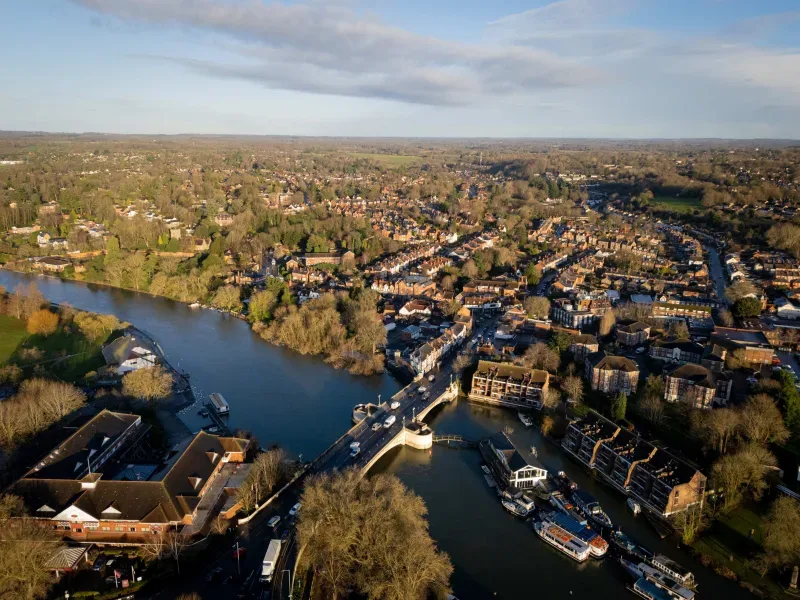
To many in Reading, Caversham is another place. Divided from the centre of town by the River Thames, its resident certainly see themselves as apart. But it is not homogenous - Lower Caversham and its terraced housing has more in common with other parts of Reading, whilst Upper Caversham seems contiguous with the leafy, prosperous villages of Southern Oxfordshire.
Still, Caversham possesses a distinct, fiercely independent identity that even predates the founding of Reading itself by centuries, from Anglo-Saxon roots, medieval religious upheaval, Civil War sieges, Victorian industrial expansion, and a controversial 20th-century political merger that forever bound its fate to the town across the water.
Caversham's origins stretch back into the Anglo-Saxon era - indeed, the very name Caversham offers a linguistic clue to its past. Etymologically, it is believed to derive from the Old English 'Cofres ham', meaning the homestead or settlement of a man named Cofre. Long before the Domesday Book cataloged the realm for William the Conqueror in 1086, people had recognized the strategic and agricultural advantages of this pocket of land between a Chiltern escarpment and the Thames. The river was both a barrier and a highway, and the location of a natural crossing point or early ford made it an attractive spot for early agrarian communities to establish roots.
Domesday Book Entries and Early Feudal Life
When the Domesday Book surveyed England in the late eleventh century, Caversham was recorded as 'Cahersham'. At the time, it was held by Walter Gautier Giffard, Lord of Longueville, a Norman baron and a Christian knight who fought against the Saracens in Spain during the Reconquista and was one of the 15 or so known companions of William the Conqueror at the Battle of Hastings in 1066. He was rewarded for his loyalty with vast estates across the country, including Cahersham.
The Domesday entry details a thriving rural settlement comprising agricultural land, woodland, and fisheries on the Thames, which were immensely valuable commodities for feeding local populations and generating trade. Life in medieval Caversham revolved heavily around the soil, the seasonal patterns of farming, and the spiritual oversight of the church. The community was small, tightly knit, and inextricably linked to the feudal structures that governed post-Conquest England. Over the subsequent centuries, ownership of the manor shifted through various noble families, including the Marshals, Earls of Pembroke, and the de Spencers. Each left their mark on the local landscape and economic development. William Marshal, Lord of Pembroke, was regent to the your Henry III and ran the country from his estate at what is now Deans Farm in Caversham. You can find out more of his story in a plaque on Caversham Bridge.
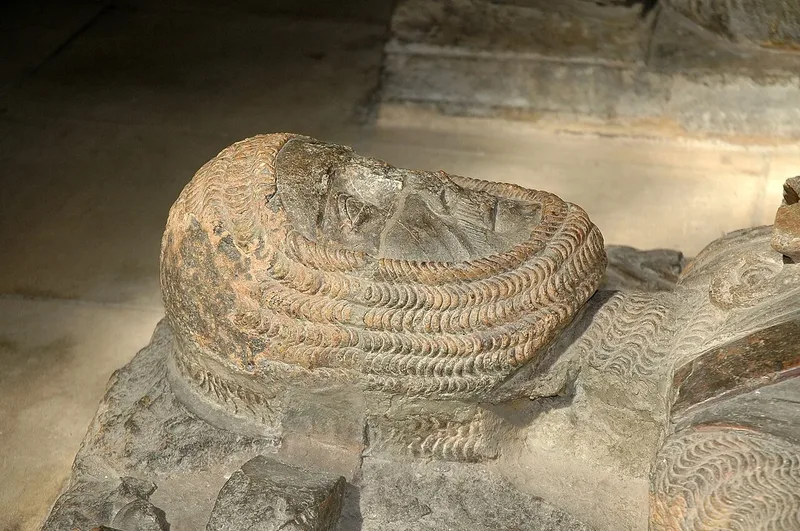
William Marshal, 'the greatest knight'
The Religious Landscape and Caversham Priory
Religion played a monumental role in shaping medieval settlement. Caversham Priory was an Augustinian cell or house that was established near the riverbanks where Caversham Court Gardens and the church of St Peter currently sit. Founded around 1162 by William Marshal, the priory became famous far beyond the borders of Berkshire due to its holy relics. Most notably, the priory housed the supposed 'Anima Christi' - a relic claimed to be the holy spear or drops of Christ's blood, along with other sacred items associated with the Virgin Mary.
Pilgrims flocked to Caversham by the thousands, seeking miraculous healings and spiritual salvation. This steady stream of travelers transformed the local economy, giving rise to inns, alehouses, and services to accommodate the pious visitors. However, this religious golden age came to a dramatic and abrupt end during the sixteenth century under the reign of King Henry VIII. During the Dissolution of the Monasteries, the King's commissioners, led by the infamous visitor John London, descended upon Caversham Priory. They confiscated the valuable gold and silver reliquaries, smashed the holy images, and suppressed the monastic community. Today, very little physical trace of the priory remains above ground, but its legacy is preserved in local street names and historical folklore, reminding modern residents of a time when the neighborhood was a bustling medieval destination for pilgrims from across Christendom.
Caversham in the Crucible of the English Civil War
Situated directly between royalist Oxford and parliamentarian London, during the English Civil War, Berkshire became a heavily contested military corridor, and Caversham found itself on the frontline of several major conflicts. Because of its strategic river crossing, possessing the bridge at Caversham was of paramount tactical importance for both the King and Parliament. In 1643, during the height of the conflict, the area witnessed significant military activity. King Charles I himself spent time in Caversham, staying at the ancient manor house, and later, in 1647, the King was held here under a form of honorable imprisonment by the parliamentary army, meeting with his children at Caversham House while negotiations took place. The old medieval bridge across the Thames, which had stood for centuries, suffered severe damage during these military maneuvers, as both sides repeatedly fortified, damaged, or destroyed crossing points to impede enemy advancement. The scars of war ran deep through the community, disrupting trade, agriculture, and daily life, but the resilient population rebuilt their homes and infrastructure once the cannons fell silent.
Bridges, Boats, and the Transformation of Transport
The history of Caversham cannot be told without looking at its relationship with the River Thames and the various means devised to cross it. For generations, communication and commerce between Caversham and Reading relied on ferries and the ancient bridge.
The medieval bridge, a sturdy stone and timber structure, was vital for connecting the Oxford road network to the south. The original medieval Caversham Bridge over the River Thames was built between 1163 and 1231 and famously housed the Chapel of Saint Anne on the bridge.
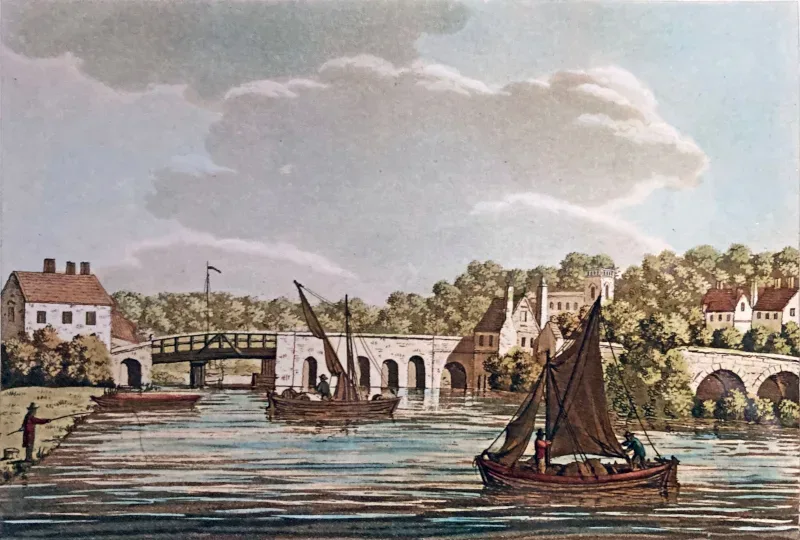
However, by the late eighteenth and early nineteenth centuries, the old bridge was increasingly inadequate for the demands of a growing industrial nation. In 1869, a new iron bridge was constructed to replace the aging medieval crossing, significantly improving transport links.
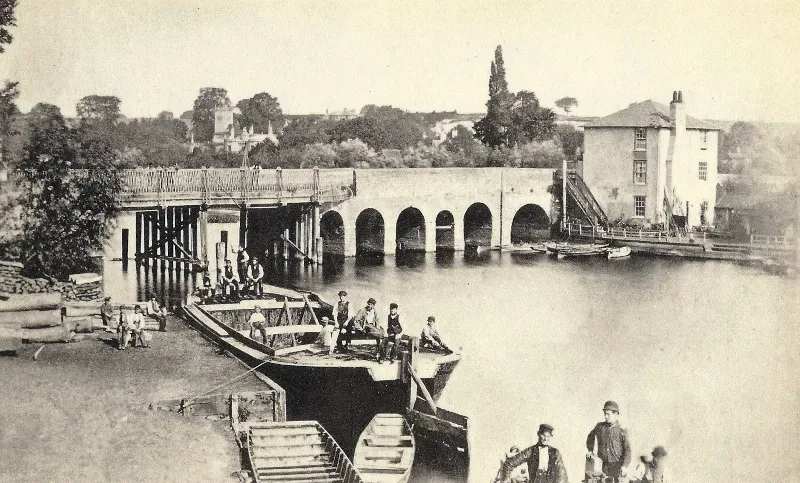
Later, in 1926, the current Caversham Bridge was opened to accommodate the burgeoning automobile traffic of the twentieth century. Alongside road transport, the river itself remained a bustling artery of trade. Barges laden with timber, grain, and coal navigated the Thames, passing through the nearby Caversham Lock, which was first established by the Thames Navigation Commissioners to manage water levels and improve navigation. The riverbanks also gradually evolved from purely industrial and agricultural zones into recreational spaces, with the late Victorian and Edwardian eras witnessing a boom in boating, regattas, and leisurely weekend promenades along the water.
Victorian Expansion and the Rise of the Suburb
The nineteenth century brought profound changes to Caversham, transforming it from a quiet rural parish into a thriving residential settlement.
As nearby Reading experienced explosive industrial growth fueled by the 'Three Bs' - Biscuits (Huntley & Palmers), Beer (Simonds), and Bulbs (Suttons) - workers and wealthy entrepreneurs alike looked across the river for cleaner air and more spacious living conditions. Caversham Court - historically known as the Old Rectory and site of the former priory - was a prominent estate on the north bank of the River Thames in Reading owned and redeveloped by the prominent Simonds Family of brewers and bankers from 1799 until the early 20th century.
Caversham began to expand rapidly. Large Victorian and Edwardian villas were constructed along main thoroughfares like Caversham Road, Gosbrook Road, and the sweeping heights of the Heights and the Mount. Wealthy businessmen, successful merchants, and professionals working in Reading chose Caversham as their sanctuary, commuting across the bridge each day. This influx of population spurred the development of local infrastructure, including schools, churches, and the bustling high street shops that we are all familiar with today.
Architectural styles shifted from rustic farmhouses and vernacular cottages to grand brick-and-slate family homes and terraced streets that still give Caversham its distinctive character. It was during this Victorian and Edwardian boom that Caversham truly began to feel like a distinct community caught in a fascinating tension between independent village life and economic dependence on its bustling southern neighbour.
Absorbed by Reading: The 1911 Boundary Extension
For centuries, Caversham was proudly part of Oxfordshire, administered from Oxford rather than Berkshire, creating a curious administrative quirk for a settlement sitting immediately adjacent to the rapidly growing town of Reading and its mainline rail and canal connections.
However, as the twentieth century dawned, the administrative division became increasingly impractical. The physical footprint of Reading had expanded across the Thames, and urban development blurred the traditional parish boundaries. Local authorities recognised the urgent need for unified municipal governance, standardised public services, and coordinated urban planning. The immediate solution was the founding of Caversham Urban District, which had been formed in 1894, but this was merely a stepping stone toward a much larger administrative shift.
On November 9, 1911, following prolonged discussions, local lobbying, and an Act of Parliament, Caversham was officially amalgamated into the County Borough of Reading. With a single stroke of a pen, Caversham crossed the county border, shifting from Oxfordshire into Berkshire, and became an integral part of Reading. While the political union was designed to streamline local government, sanitation, education, and policing, many traditional residents viewed the move with skepticism, fearing the loss of their historic identity.
Over a century later, whilst Caversham is undeniably a part of greater Reading, its residents maintain a fiercely proud, distinct local consciousness, often quick to correct outsiders who mistakenly refer to Caversham simply as a part of Reading rather than acknowledging its unique historical standing.
Fascinating Personalities and Local Lore
Down the years, has Caversham boasted many personalities that have lived, worked, or passed through its boundaries. One of the most famous figures associated with Caversham is the artist and poet William Thomas Horton, a prominent figure of the late nineteenth-century Decadent movement and a close friend of Aubrey Beardsley. Horton spent part of his life in the area, drawing inspiration from the mystical landscape of the Thames valley. Another notable literary connection is found in the life of the Victorian novelist and travel writer Mary Russell Mitford, whose works frequently touched upon the picturesque scenery of Berkshire and who had deep social ties throughout the region. In more recent times, Caversham has been home to numerous artists, musicians, and writers, attracted by its creative village atmosphere and proximity to London.
Many locals tell the story of the time when John Lennon and Paul McCartney briefly stayed in Caversham, working at the Fox & Hounds pub and performing locally as 'The Nerk Twins'. In April 1960, during their Easter holidays, the teenage duo took their first holiday together by hitchhiking from Liverpool down to Berkshire. The pub was being managed at the time by Paul McCartney’s cousin, Bett Robbins, and her husband, Mike.
Caversham also holds a unique place in sporting and broadcasting history. The BBC Monitoring service, which listens to and analyses broadcasts from around the world, established one of its most important listening stations at Caversham Park during the Second World War. With the onset of war, the property was requisitioned by the government and purchased by the BBC. In the spring of 1943, BBC Monitoring moved its headquarters to Caversham Park.
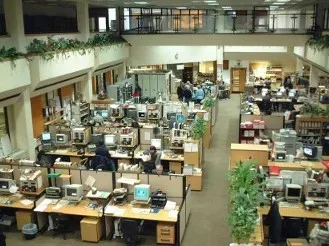
During WWII and the Cold War, the station served as a critical global listening post, monitoring foreign radio broadcasts to gather open-source intelligence for the British government and Allied forces. At its peak in 1945, over 1,000 staff worked at the site. In the 1980s, a 10-meter satellite dish was added to the grounds (painted green to blend into the landscape), alongside updated wings and newsrooms. The site also served as the home of BBC Radio Berkshire. After 75 years of continuous broadcasting and monitoring operations, the BBC officially vacated Caversham Park in November 2018.
Today, Caversham retains its villagey feel, but suffers tremendously from poor public transport connections, with the recent withdrawal of services causing controversy and seemingly endless roadworks causing total gridlock at times for those trying to either passing through or using it as a shopping destination. Well over a century on, the benefits of being part of the wider Reading area remain controversial, especially when large swathes of the town lie in other boroughs such as Wokingham and West Berkshire.
Comments
No comments yet. Be the first to share your thoughts.
Join the conversation
Log in to leave a comment on inReading.