
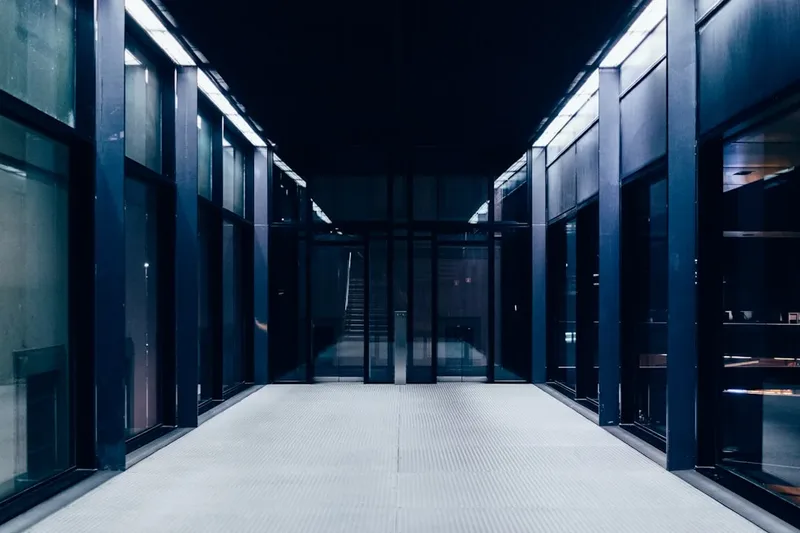
For decades, Reading has proudly claimed the crown as the 'Silicon Valley' of the United Kingdom, where global tech giants base their UK and European headquarters.
From DEC to Microsoft, the proximity to Heathrow and the access to an educated workforce made our region a hub for US, Chinese and German companies establishing a presence in Europe. Shiny offices and 'campuses' have dominated the outskirts of Reading, from Winnersh to TVP and Green Park.
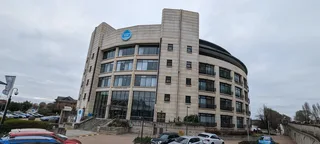
However, as the digital era moved into its online epoch, more and more companies based themselves in central London and former stalwarts such as Microsoft have moved much of their staff either into London or working from home.
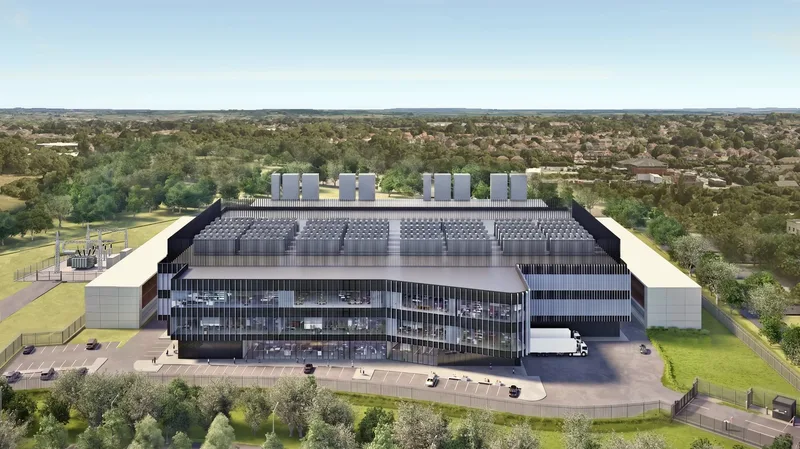
Now, as the digital age moves into the AI era, a new kind of technological behemoth is seeking to reshape the local skyline and a proposal to turn the abandoned Microsoft campus at Thames Valley Park into a data centre has elicited a lot of local objections and controversy. Over five thousand people have signed a change.org petition started by Jenna Graby.
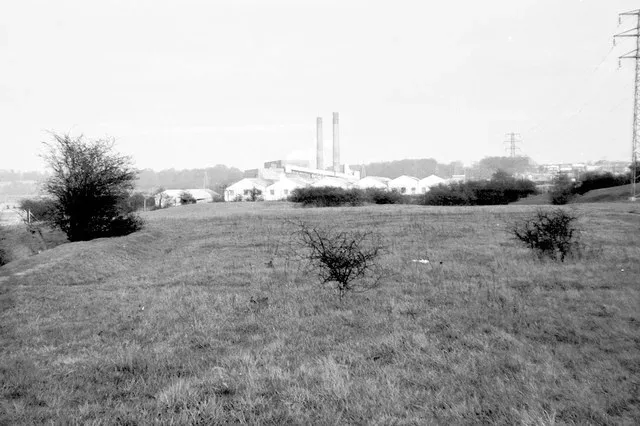
But in the 20th century this site used to be a coal powered power station spewing all kinds of outputs into the riverside environment. So, are the new proposals for the site a step into the future or back to the past?
Why Do We Need Data Centres So Much
The internet and crypto mining demanded vast data centres where 'the cloud' lived. Everything you do on your PC, smartphone or games console is controlled from these anonymous warehouses which, on the outside, look like any other massive industrial building on an industrial complex.
But the advent of Artificial Intelligence has accelerated the need for these wired centres.
Yet, building these modern cathedrals of compute comes at a staggering real world cost. The sheer physical footprint of AI infrastructure is reshaping municipal planning and environmental resource management across the globe.
Traditional data centre racks historically drew around 5 to 10 kilowatts of electricity. High-density AI racks demand 40 to well over 100 kilowatts per rack. A single mega-facility can consume as much electricity as a small city, placing unprecedented demands on local energy grids and forcing tech giants to secure dedicated power generation.
The sheer heat generated by thousands of densely packed GPUs working at maximum capacity creates a severe thermal management problem. Standard air conditioning simply cannot dissipate the heat fast enough. Operators increasingly turn to liquid-to-chip cooling loops and evaporative systems, with large facilities drawing millions of gallons of water daily to keep silicon temperatures stable - although most new facilities use closed-loop systems that do not draw on local water supplies. Beyond energy and water, these facilities require heavy-duty reinforced engineering to support multi-ton server cabinets, private high-voltage substations, and extensive microgrids. Furthermore, their construction drives massive demand for raw materials—drawing heavily on global supply chains for copper, silicon, lithium, and rare earth elements necessary for chips, high-capacity UPS batteries, and electrical transformers.
The upside of this is a lot of construction work for local contractors, although often the skills required are specialised. These are skills that exist and are in demand within our area. Once built there is a need for further specialist staff for security, maintenance and technical management, but this will in no way replace the many valuable jobs once hosted on the site by the tech multinationals.
The TVP Debate
Not surprisingly, as AI models continue to expand in scale and ambition, the debate over how to balance their voracious appetite for resources with regional grid capacity and sustainability goals is rapidly becoming one of the defining technology questions of our era and has sparked a fierce debate in the region.
The proposal to transform the site of the former Earley coal-burning power station (confusingly at Woodley) into a sprawling data centre has ignited a passionate community backlash. While proponents herald these digital fortresses as the indispensable engine rooms of modern life—powering everything from cloud computing to artificial intelligence—local residents and environmental campaigners are asking a stark, urgent question: are data centres actually good for Reading, or are we trading our green futures for blinking server racks?
The controversy centres on the sheer scale and resource-hungry nature of modern data facilities. Unlike traditional office spaces that once occupied such plots, bringing a steady hum of human workers who frequented local high streets and cafes, contemporary data centres are largely automated monoliths. Industry figures show that hyperscale data centres can consume as much electricity as a small town, drawing tens of megawatts of power continuously. Critics in Woodley and the wider Reading borough point out the glaring irony of replacing a decommissioned fossil-fuel power station with a facility that places an unprecedented, highly demanding strain on the local grid—potentially undermining the council’s ambitious net-zero carbon targets. A recent report by the CoworkingCafe rated Reading 8th for sustainability with the 10th lowest carbon emissions out of 94 UK urban centres, comfortably ahead of places with more data centres such as Oxford (31st) and Slough (69th).
Local opponent Jemma Graby asks: “What is this data centre offering that we don’t already have?”
Conversely, digital infrastructure developers and economic analysts argue that resisting data centres is like turning our backs on the digital economy entirely. With the UK government designating data centres as critical national infrastructure, supporters emphasise that Reading’s economic survival may partially depend on remaining at the cutting edge of data storage and processing capacity. Supporters claim these projects generate significant construction phase employment, attract multi-million pound inward investments, and provide robust business rates revenue that local authorities can desperately use to fund our public services. Furthermore, modern operators frequently pledge to invest in green energy procurement and resources.
There is the whiff of NIMBYism and even hypocrisy around objecting to the data centres, after all every time we stream a film, send an encrypted message, or use AI tools to diagnose medical conditions, that data needs a home. Turning down data centres doesn't stop them from being built - it just pushes them down the road to Slough or Swindon and pushing Reading further down the economic ladder as a result.
Council Positions
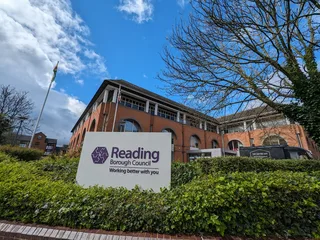
And where do our local councils stand on this? The site stands in Wokingham, but has an obvious impact on the wider Reading area. As reported by Bradio the politicians seem to be sitting on the fence, trying to keep both central powers in Westminster and local residents happy:
Councillor Kaisa Nikulina (Green, Katesgrove), asked at a RBC policy committee meeting: "What is the council's position on the government's approach to data centres, particularly where decisions may be taken nationally rather than locally? And where a development outside the borough could have a major impact on Reading, how will the council make sure the views and interests of Reading residents are represented?"
Micky Leng (Labour, Whitley), lead councillor for planning, replied: "I welcome this chance to clarify this council's position. Data centres were designated as critical national infrastructure in 2024.
"In January 2026, data centres were added to the list of businesses or commercial projects that can be regarded as nationally significant infrastructure projects, and potentially subject to a development consent order, under which applications can be made directly to the Secretary of State rather than the planning authority.
"There is no specific scale or threshold for what makes a data centre nationally significant, but a national policy document for data centres is expected.
"The council has a number of significant concerns around a large-scale development of data centres in the local area.
"This includes significant greenhouse gas that would put meeting our local net zero ambitions in jeopardy, additional pollution impacts, where, for reasons of supply limitations, fossil fuel-powered systems are going to be used, high levels of demand on energy and water supply and the implications that this could have on the supply networks, which would compromise the ability to provide utilities to the planned level of development in our Local Plan.
"Local environmental impacts including heat and noise impacts from the associated air cooling apparatus, and lastly the limited employment benefits of the data centre when compared to a more traditional warehouse.
"However, the council also understands that careful use of AI can offer significant benefits to individuals and organisations, including this council, and the increasing take-up of AI necessities and increasing need for data centres."
The Local Upside?
The developers of the proposed TVP centre have said that it would use fuel cells powered by natural gas to generate electricity while additional grid capacity is brought forward - hardly a green solution. Moreover, they claim that the scheme could support up to 245 construction jobs and at least 115 full-time equivalent jobs once operational.
It estimates the development would involve more than £200 million of construction investment and generate business rates for local services.
The proposed development would occupy about 5.3 hectares of the existing Thames Valley Park business site as demand for office space declines. It has to be recognised that even central Reading is full of empty office buildings, many of which are being turned into residential blocks as demand for offices outside London has waned post-pandemic.
Ultimately, the battle lines drawn at the old Earley power station site reflect a profound nationwide dilemma: how to balance the insatiable, invisible demands of our digital lifestyles with the tangible, localised realities of climate change and community preservation? As Wokingham Borough Council weighs the planning application in the coming months, the decision will likely cast a long shadow with other potential sites along the M4 corridor in our vicinity.
Slough has already benefited from the presence of extensive data centres and it should be pointed out that in the past everything from the spinning wheel to 5G masts have drawn vocal local objections against the relentless progress of technology. The data centres will be built somewhere and the protests will soon be forgotten.


Comments
No comments yet. Be the first to share your thoughts.
Join the conversation
Log in to leave a comment on inReading.