
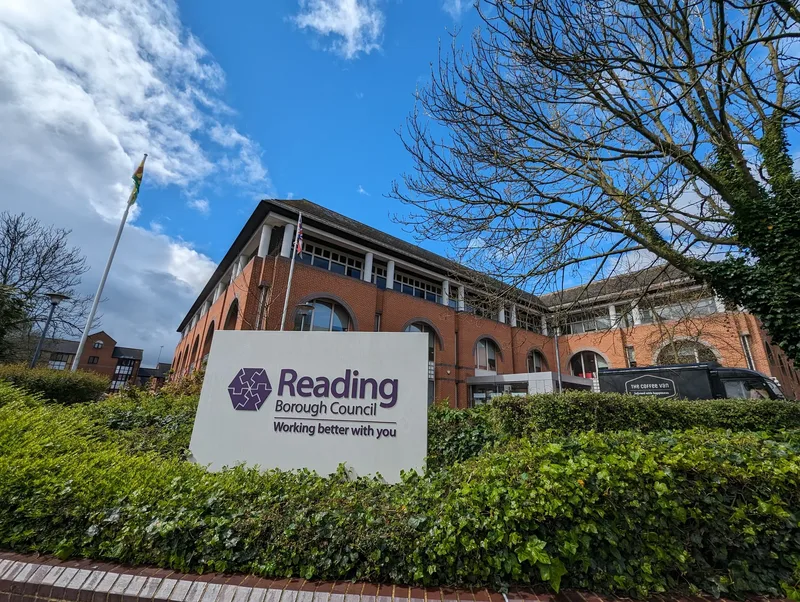
The political landscape across the Thames Valley has shifted after the recent local elections.
If one thing was clear from last month's local elections in Reading and Wokingham it is that we no longer live in a two party state or even a two party region. The Tories who long dominated Wokingham, and Labour, who have had a near monopoly in town, are now part of a five party system comprising of the Lib Dems, the Greens and Reform UK.
Recent local council elections have served as a litmus test for the national mood, exposing deep fissures in the traditional party strongholds that have defined our region for decades with the Tories and Labour swapping MPs roughly in line with the national vote, so what are the results and implications for our area based on the local results ?
No councils changed hands, but the trend is undisputable: we now live in an era of multi party European type politics where we are unlikely to see one or two parties dominate again for the foreseeable future.
As we unpack the specific numbers from Reading Borough Council and Wokingham Borough Council, the reality is that the old political binary is dying, and something more volatile and unpredictable is taking its place. The data suggests that the comfortable margins of the past have evaporated, leaving candidates to navigate an increasingly hostile and fragmented electorate that no longer responds to the traditional hegemony.
Reading Borough Council: The Consolidation of Labour Dominance
Reading’s political landscape has been thoroughly shaken up. While Labour managed to hold onto overall control of Reading Borough Council with 29 seats, their historic grip on the town is loosening as voters demand a fresh direction.
The biggest story of the night belongs to the Green Party, who achieved their best-ever result in Reading. Expanding their presence to 11 seats, the Greens have firmly cemented themselves as the official opposition. In a series of dramatic upsets, Green challengers unseated three high-profile, long-serving Labour cabinet members in Abbey, Thames, and Coley wards.
This targeted surge proves that localized progressive and environmental dissatisfaction is changing the face of municipal politics.
Despite capturing national headlines and securing thousands of protest votes across our wards, the ultra right Reform UK failed to break through in a deeply multi ethnic town. The party entered election night with one councillor—former Conservative leader Clarence Mitchell, who had defected to Reform—but lost the seat back to the Tories in Emmer Green. Reform leaves the chamber with zero councillors, though local party leaders insist their solid vote shares in areas like Kentwood and Norcot provide a foundation for the future.
The new 48-seat council chamber leaves Labour with 29 seats (down 4), the Greens with 11 (up 3), the Conservatives with 5 (up 1), and the Liberal Democrats holding steady at 3.
While Labour leader Liz Terry still commands a functional majority to pass budgets, the loss of key executive cabinet members means the ruling party faces a highly energized, emboldened Green opposition with a reshuffle already undereway. Expect much tougher debates ahead on local climate policies, community safety, and local town infrastructure.
Wokingham: The Collapse of the Conservative Heartland
If Reading represents the consolidation of power, Wokingham offers a stark, cautionary tale of the Conservative Party’s decline in what was once considered an unassailable bastion of Tory support where thatcherist hardliner John Redwood held a seat for nearly forty years.
Wokingham was the archetype of the suburban blue wall—a place where the ballot box was considered a formality rather than a choice. Yet, the recent electoral outcomes have dismantled this myth step-by-step.
The steady erosion of the Conservative majority, replaced by a complex, multi-party landscape involving the Liberal Democrats and independents, signals a profound identity crisis for local conservatism. Residents in Wokingham are no longer voting along traditional party lines; they are voting against an establishment that they feel has ignored the realities of over-development, strained public services, and the cost-of-living squeeze. on the surface the borough looks very affluent, but there is increasing evidence that this is hiding cracks underneath.
The swing away from the Conservatives here is not just a protest - it is a fundamental realignment. Voters who once identified as natural Tories are finding that their values no longer align with the party’s direction at the local or national level. This shift is tectonic, and the Conservative Party machine, which once functioned like clockwork, now appears rusted and out of touch with the very people who built its success. Unlike in Reading, where the swing has been to the Greens, in Wokingham it is the Liberal Democrats who have benefitted, gaining another seat from Labour at the recent vote. The council now sits with: Liberal Democrats: 29 seats, Conservative Party: 19 seats, Labour Party: 5 seats and the Green Party: 1 seat
Extrapolating to Westminster: The Next Election
Another factor that has changed the political landscape locally was the massive Westminster boundary shake-up, dividing our area into three distinct battlegrounds. With possible local boundary changes also coming, directly mapping past results and current trends onto furture elections is difficult, but data from the independent tracking site PollCheck reveals that the upcoming election won’t just be a repeat of the past. Driven by shifting demographics, changing local council seats, and surging alternative parties, our three local constituencies are moving in completely unexpected directions.
Here is how the numbers look right now, and what they mean for the future of our local representation.
Reading Central: The Green Surge Threatens a Labour Stronghold
-
Current MP: Matt Rodda (Labour)
-
2024 General Election Result: Labour comfortable win (47.7%), Conservatives second (19.8%).
Reading Central, which takes in the urban heart of the town, includingthe town centre, Caversham and the university areas—has looked like a safe bet for Labour since they won the predecessor seat back in 2017. Matt Rodda secured a massive 12,637-vote majority under the new boundaries.
However, the latest PollCheck data suggests a dramatic shift. While Labour still holds a lead, it is shrinking fast.
| Party | 2024 Actual Vote | Current PollCheck Projection | Change |
| Labour | 47.7% | 35.7% | -12.0% |
| Green | 14.2% | 28.1% | +13.9% |
| Reform UK | 8.6% | 15.8% | +7.2% |
| Conservative | 19.8% | 12.1% | -7.7% |
| Lib Dem | 8.8% | 7.7% | -1.1% |
Reading Central is a highly educated, younger, and tenant-heavy constituency (45.2% of residents have a degree; over half rent privately or through social housing). This demographic mix is proving incredibly fertile ground for the Green Party.
This isn't just hypothetical national polling data leaking in. Local council election data shows this shift happening live on our doorsteps. In the recent local ballots, wards like Park, Redlands, and Katesgrove saw massive swings away from Labour to elect Green councillors. Even central wards like Abbey and Coley flipped from Labour to Green. Reading Central is rapidly transforming from a Labour-Conservative battleground into a high-stakes Labour-Green progressive showdown.
Reading West and Mid Berkshire: A Brand New Three-Way Knife-Edge
-
Current MP: Olivia Bailey (Labour)
-
2024 General Election Result: Labour gain from Conservative by just 1,361 votes.
If Reading Central is a battle of ideas on the left, Reading West and Mid Berkshire is absolute political chaos. This vast, sprawling seat mixes working class suburban Tilehurst, Kentwood, and Norcot with affluent West Berkshire villages like Pangbourne, Bradfield, and Theale.
Olivia Bailey scraped a narrow 3.0% victory here, but current tracking indicates the seat has completely fractured into a three-way tie where tactical voting on the right may play a part int he electorcal outcome.
| Party | 2024 Actual Vote | Current PollCheck Projection | Change |
| Labour | 35.0% | 24.3% | -10.7% |
| Reform UK | 13.4% | 24.1% | +10.7% |
| Conservative | 32.0% | 22.5% | -9.5% |
| Green | 6.8% | 17.5% | +10.7% |
| Lib Dem | 11.0% | 10.0% | -1.0% |
With 70.2% of homes being owner-occupied and a much higher median age (nearly 43), this seat naturally leans further right than its urban neighbor. However, traditional Conservative voters are fracturing.
According to PollCheck, Reform UK has surged into a statistical dead-heat with Labour, trailing by a microscopic 0.2 percentage points. At the same time, the Greens have nearly tripled their projected share to 17.5%, tearing into Labour’s left flank in suburban estates.
Local council voting patterns emphasize this breakdown. In recent local elections, Labour’s vote share plummeted by 13.5 points in Kentwood and nearly 17 points in Norcot. Meanwhile, Tilehurst voters defected en masse to the Liberal Democrats, while Reform UK put up strong second-place finishes across the suburban wards.
This is one of the most unpredictable marginal seats in the entire UK. A shift of just a few hundred voters could hand the seat to Labour, Reform UK, or the Conservatives.
Earley and Woodley: The Suburban Wildcard
-
Current MP: Yuan Yang (Labour)
-
2024 General Election Result: Labour historic win (40.4%), Conservatives second (31.7%).
The creation of Earley and Woodley was the biggest surprise of the boundary review, pulling together distinct suburbs from Wokingham Borough with parts of East Reading (like Church ward) to form a brand-new entity. Yuan Yang took the historic first win for Labour with a majority of 4,374.
Because this seat is built from disparate pieces across different local authorities, tracking it is notoriously difficult. Nationally, seats with this specific profile—graduate-heavy, middle-class suburban professionals with young families—are seeing intense tug-of-war dynamics.
While specific data access for this sub-profile is tighter, the broader trends impacting its surrounding neighbors apply directly here. The massive squeeze on the Labour vote seen in Central and West Reading means Yuan Yang will be playing serious defense.
The outcome here rests entirely on a multi-directional split: Can the Conservatives win back the traditional, affluent suburban voters in Earley and Sonning? How deeply will the Lib Dems (who traditionally perform exceptionally well in Wokingham local elections) squeeze the centrist vote? Will the progressive, university-adjacent voters in the Reading end of the seat stay loyal to Labour or drift Green?
Earley and Woodley remains a highly volatile suburban wildcard. If the opposition vote remains fractured between the Conservatives, Lib Dems, and Reform, Labour could hold on through the middle. If any single opposition party consolidates that suburban discontent, it will go down to the wire.
Infrastructure and Housing: The Unspoken Election Deciders
Even as immigration falls back and housebuilding slows, the single most contentious issue across both Reading and Wokingham remains the relentless pace of development. The three political constituencies by now represent one urban sprawl of high rise modern blocks and suburban identikit houses. Planning policy is the now the frontline of politics. The dog whistle politics of Reform UK and its social media supporters have somehow managed to instill the idea that immigrants not Thatecherite policies are responsible for the lack of social and affordable housing. Meanwhile, in the few remaining green belts such as the area around the proposed massive Loddon Valley 'new village' backed by the University, NIMBYism raises its head with voiciferous local opposition to even small scale developments.
Local councillors have found themselves caught in a vice: the mandate to deliver housing quotas imposed by Westminster versus the vociferous opposition of existing residents who fear the erosion of their local character and this may well reflect results in the future national election.
Demographic Shifts and the Changing Voter Profile
The demographic composition of the Reading area is not what it was twenty, or even ten years ago. The influx of young professionals working in the tech sector, combined with the migration of families from London seeking more space and a considerable ethnic population has created a voter profile that is younger, more diverse, and less loyal to the traditional parties. Traditionally these were left leaning Labour supporters, but a combination of economic factors (these communities are getting wealthier), perceived Labour support for Israel against Palestine and an increase in more conservative orientated immigrants from India and Hong Kong
This demographic is less concerned with the historical party allegiances of their parents and more focused on issues like environmental sustainability, public transport connectivity, and the cost of childcare. The local elections in Wokingham, in particular, showed a marked shift in voting patterns among younger demographics who are traditionally hard to reach but highly influential when they do turn out. Politicians who continue to focus their messaging on the 'traditional voter' are fundamentally misunderstanding the population they represent. The future of Reading’s politics belongs to those who can capture the imagination of this new, pragmatic, and highly mobile constituency that is quick to punish incompetence and slow to offer loyalty.
Looking At The Bottom Line
Beyond the ideological battles, there is a simmering resentment regarding the fiscal management of our local councils across the UK - Reading and Workingham are reasonably solvent, but Slough and Windsor and Maindehead are in dire straits.
Slough Borough Council remains under the direct control of government-appointed commissioners, an intervention that was officially extended following its catastrophic Section 114 notice. Slough's crisis was originally triggered by historic financial mismanagement and a severe commercial debt portfolio. However, its ongoing instability is compounded by an acute budget gap driven by spiralling costs in temporary accommodation and adult social care.
Just a few miles away, the Royal Borough of Windsor and Maidenhead (RBWM) has spent months on the absolute precipice of issuing its own Section 114 notice. RBWM's financial distress stems from a decade of keeping council tax artificially low alongside heavy borrowing, which completely eroded its financial resilience.
Meanwhile reading is spending over 70% of its budget on social care, leaving little left for other issues that voters see as important. This is being seized upon by Reform UK whodespite their racist policies and lack of any fundamental new vision for the country according to Electoral Calculus seem to be on course to be the majority party at the next election:
- Reform UK: 245 seats (up from 5) — Predicted to be the largest party but short of the 326 needed for an outright majority.
- Conservative Party: 116 seats (down from 121) — Stabilising into second place after severe declines.
- Labour Party: 83 seats (down from 412) — Projected to fall to third place in a historic collapse of their 2024 parliamentary majority.
- Liberal Democrats: 61 seats (down from 72) — Remaining a stable minor force.
- Green Party: 61 seats (up from 4) — Achieving a massive parliamentary breakthrough fueled by high support among younger voters.
- Scottish National Party (SNP): 46 seats (up from 9) — Rebounding significantly in Scotland.
- Plaid Cymru: 15 seats (up from 4)
Coalitions and the Fragility of Power
Perhaps the most compelling outcome and take away from the recent elections is the advent of the era of European like coallitions from the top to the bottom of government.
The era of comfortable majorities is over, replaced by the need for negotiation, compromise, and constant political horse-trading. Arguably this is, in many ways, a return to a healthier, more deliberative form of democracy, but it is also one that is prone to gridlock and indecision. Ironically, the electoral imperitive for greater change will result in less.
The ability to work across party lines is now a required skill set for any aspiring MP. Those who cannot build consensus will find it impossible to govern effectively in an environment where no single party holds all the cards. The Reading area is becoming a microcosm of a new national political reality: one where the messy business of compromise is the only way forward.
Comments
No comments yet. Be the first to share your thoughts.
Join the conversation
Log in to leave a comment on inReading.